
Every cricket fan has done it. You finish watching a last-over thriller, pick up your phone, and go straight to the points table to see where your team stands. Over two months of the Indian Premier League, that table becomes a daily habit. It shows which teams are in control, which are under pressure and which are already planning for next year. For many fans it is just as gripping as the matches, because a single result on a Tuesday night can change the playoff race for four or five teams at once.
The 2026 season, the 19th edition of the tournament, made the table more dramatic than usual. Three teams finished level on 18 points. The fourth playoff spot went down to the final weekend. A team that led the table in early May finished outside the top four. In the end, Royal Challengers Bengaluru topped the league stage and then went on to win a second straight title. Looking back at the final IPL standings explains a lot about how the season played out, from who peaked at the right time to who ran out of steam.
In this article we go through the final table in detail and explain how points and net run rate work. We look at the journey of each playoff team, look at the teams that fell short, and finish with what the 2026 table means for the 2027 season, which is already taking shape with retentions done and a mini-auction coming in December. Whether you are a casual viewer or someone who follows every net run rate calculation, this guide should help you read the table with more confidence.
What the IPL Standings Actually Measure
At first glance the points table looks like a simple list of ten teams ranked from top to bottom, but each column tells part of the story. The table shows matches played, wins, losses, no results, total points and net run rate. In the league stage, each of the ten franchises plays 14 matches, which makes 70 league games in total. After every one of those games the table updates, and the ranking can change sharply in the space of one evening.
The real purpose of the IPL standings is to decide who goes into the playoffs and in what position. Only the top four teams go through, and where they finish within that top four matters a great deal, as we explain later. That is why fans and team analysts watch the table closely through the second half of the season. A team in fifth place with two games left is still in the race, but its fate often depends on results elsewhere as well as its own.
How the Points System Works
The scoring system is easy to follow. A team gets two points for a win, one point for a no result (usually a washout) and nothing for a loss. A tied match is decided by a Super Over, so every completed game produces a winner who takes both points. Because the system is so simple, the gaps in the table are usually small, and one extra win across 14 matches can be the difference between a playoff place and an early exit.
The 2026 season showed how much a single washout can matter. Punjab Kings and Kolkata Knight Riders each had a no result during the league stage, which is why they ended on odd totals of 14 and 13 points. That one shared point can lift a team above a rival, or leave it just short of where it needed to be.
Why Net Run Rate Is the Great Tiebreaker
When two or more teams finish on the same points, net run rate decides the order. Net run rate compares how quickly a team scores its runs with how quickly it concedes them over the season. A team that wins big and loses narrowly will usually have a healthy positive figure, while a team that suffers heavy defeats can see its number drop sharply even if its win count looks respectable.
The 2026 table is a textbook example. Royal Challengers Bengaluru, Gujarat Titans and Sunrisers Hyderabad all finished on 18 points with identical records of nine wins and five losses. Only net run rate separated them, and that small mathematical gap decided who got the easier route to the final. Delhi Capitals and Punjab Kings were also level on 14 points, but Punjab sat higher because their net run rate was more than a full run better.
IPL 2026 Final League Table at a Glance
Before looking at the individual stories, here is the complete league-stage table as it stood after the final group match. It covers matches played, results, points and net run rate for all ten franchises.
| Pos | Team | P | W | L | NR | Pts | NRR |
|---|---|---|---|---|---|---|---|
| 1 | Royal Challengers Bengaluru | 14 | 9 | 5 | 0 | 18 | +0.783 |
| 2 | Gujarat Titans | 14 | 9 | 5 | 0 | 18 | +0.695 |
| 3 | Sunrisers Hyderabad | 14 | 9 | 5 | 0 | 18 | +0.524 |
| 4 | Rajasthan Royals | 14 | 8 | 6 | 0 | 16 | +0.189 |
| 5 | Punjab Kings | 14 | 7 | 6 | 1 | 14 | +0.309 |
| 6 | Delhi Capitals | 14 | 7 | 7 | 0 | 14 | -0.704 |
| 7 | Kolkata Knight Riders | 14 | 6 | 7 | 1 | 13 | -0.098 |
| 8 | Chennai Super Kings | 14 | 6 | 8 | 0 | 12 | -0.345 |
| 9 | Mumbai Indians | 14 | 4 | 10 | 0 | 8 | -0.584 |
| 10 | Lucknow Super Giants | 14 | 4 | 10 | 0 | 8 | -0.740 |
The first thing to notice is how close the top half was. Only four points separated first from fifth, and the top three were level on points. At the bottom, two of the league’s best-known franchises, Mumbai Indians and Lucknow Super Giants, finished joint last with eight points each. This was a season of fine margins at the top and real struggles at the bottom, which is why the final IPL standings are worth studying closely.
How the Top Four Earned Their Places
Every team that reaches the playoffs has its own story. Some lead from the front all season, others time their run late. The 2026 top four had a mix of both, and each team’s route says something about what it takes to finish high in a ten-team league.
Royal Challengers Bengaluru: Champions Who Kept Their Edge
Royal Challengers Bengaluru came into the season as defending champions after winning their first title in 2025, and they played like a side that had shed years of pressure. Under Rajat Patidar’s captaincy they were the first team to confirm a playoff place, and they finished top on 18 points with the best net run rate in the league. Even a defeat to Sunrisers Hyderabad in their last league game could not knock them off top spot, because the net run rate they had built up earlier gave them enough of a cushion.

What stood out about RCB was their depth. Many teams depended on two or three batters doing well, but Bengaluru had contributors right through the order, backed by a bowling attack that could defend totals and close out chases. That balance kept their losses narrow and their wins comfortable, and it is exactly the pattern that produces a strong net run rate across 14 games.
Gujarat Titans: Consistent Until the Very End
Gujarat Titans matched RCB’s nine wins and finished second, behind only on net run rate. Under Shubman Gill they were consistently strong all season and rarely lost two in a row. Finishing second gave them the same advantage as the table-toppers: a place in Qualifier 1 and a second chance if they lost it.
Gujarat used that safety net. After a heavy defeat in Qualifier 1 they regrouped and won their way back to the final through Qualifier 2. A team that finished fourth would not have had that second chance.
Sunrisers Hyderabad: Firepower With a Cost
Sunrisers Hyderabad also won nine league games and stayed true to their reputation as the league’s most explosive batting side. Their high-risk approach produced big totals and quick chases, which helped them reach 18 points. But a slightly weaker net run rate than RCB and GT pushed them down to third, which meant the Eliminator instead of a Qualifier.
This shows how a few runs here and there over a season can decide a team’s route through the playoffs. SRH were level with the top two on points, but third place gave them no margin for error, and one bad night in the Eliminator ended their campaign.
Rajasthan Royals: The Late Surge
Rajasthan Royals took the final playoff place with 16 points. They sealed it with a win over Mumbai Indians in their last league game, while Punjab Kings, Kolkata Knight Riders and Delhi Capitals were all still in contention going into the last weekend. Rajasthan held their nerve when it mattered.
Their season was lit up by teenage opener Vaibhav Sooryavanshi, whose fearless strokeplay made him one of the stories of the tournament. Rajasthan’s run shows that a team does not have to dominate all season to make the top four. It needs enough wins at the right moments and a strong finish.
The Teams That Fell Short
For every team that celebrates a top-four finish, six go home disappointed. Some of those exits came down to one point, while others were clear from early on. Looking at them shows how quickly the IPL standings can turn against a team.
Punjab Kings, Delhi Capitals and Kolkata Knight Riders: So Close
Punjab Kings had the most painful season of the lot. In early May they were top of the table, with 13 points from their first nine matches, and looked certain to reach the playoffs. Then their form collapsed. They managed just one more win in their last five games, finished on 14 points and slipped to fifth. It is a reminder that a strong first half guarantees nothing; points have to keep coming until the final match.
Delhi Capitals also finished on 14 points but sat sixth because of a heavily negative net run rate, the result of some lopsided defeats during the season. They signed off with a convincing win over Kolkata Knight Riders in a dead rubber, which was some consolation. Kolkata ended seventh on 13 points and were knocked out on the final matchday along with Punjab. For all three franchises, the gap between hope and heartbreak was one or two results.
Chennai Super Kings, Mumbai Indians and Lucknow Super Giants: Seasons to Forget
Chennai Super Kings had a disappointing campaign and finished eighth with 12 points from six wins. For a franchise used to playoff cricket, it was a season of rebuilding rather than contending, and the changes in its squad since then suggest the management agrees.
Mumbai Indians and Lucknow Super Giants struggled the most, with four wins each and eight points apiece at the bottom of the table. For Mumbai, one of the most successful franchises in league history, finishing ninth was a clear sign that changes were needed. Lucknow finished last on net run rate. Both teams went into the off-season with plenty to think about.
From Table to Trophy: How the 2026 Playoffs Unfolded
The playoff format rewards teams that finish high, and the 2026 knockouts followed the table closely, with one exciting exception. In Qualifier 1, table-toppers RCB played second-placed GT for a direct place in the final. Bengaluru made an emphatic statement, posting 254 for 5 and bowling Gujarat out for 162 to win by 92 runs. It was a performance that showed why they had finished first.
The Eliminator between third-placed SRH and fourth-placed RR was one of the most memorable matches of the season. Played in Mullanpur, it belonged to 15-year-old Vaibhav Sooryavanshi, who hit 97 off just 29 balls as Rajasthan reached 243 for 8. Their bowlers then dismissed Hyderabad for 196 to win by 47 runs. A team that had only just squeezed into the playoffs had knocked out one that finished level with the top two on points.
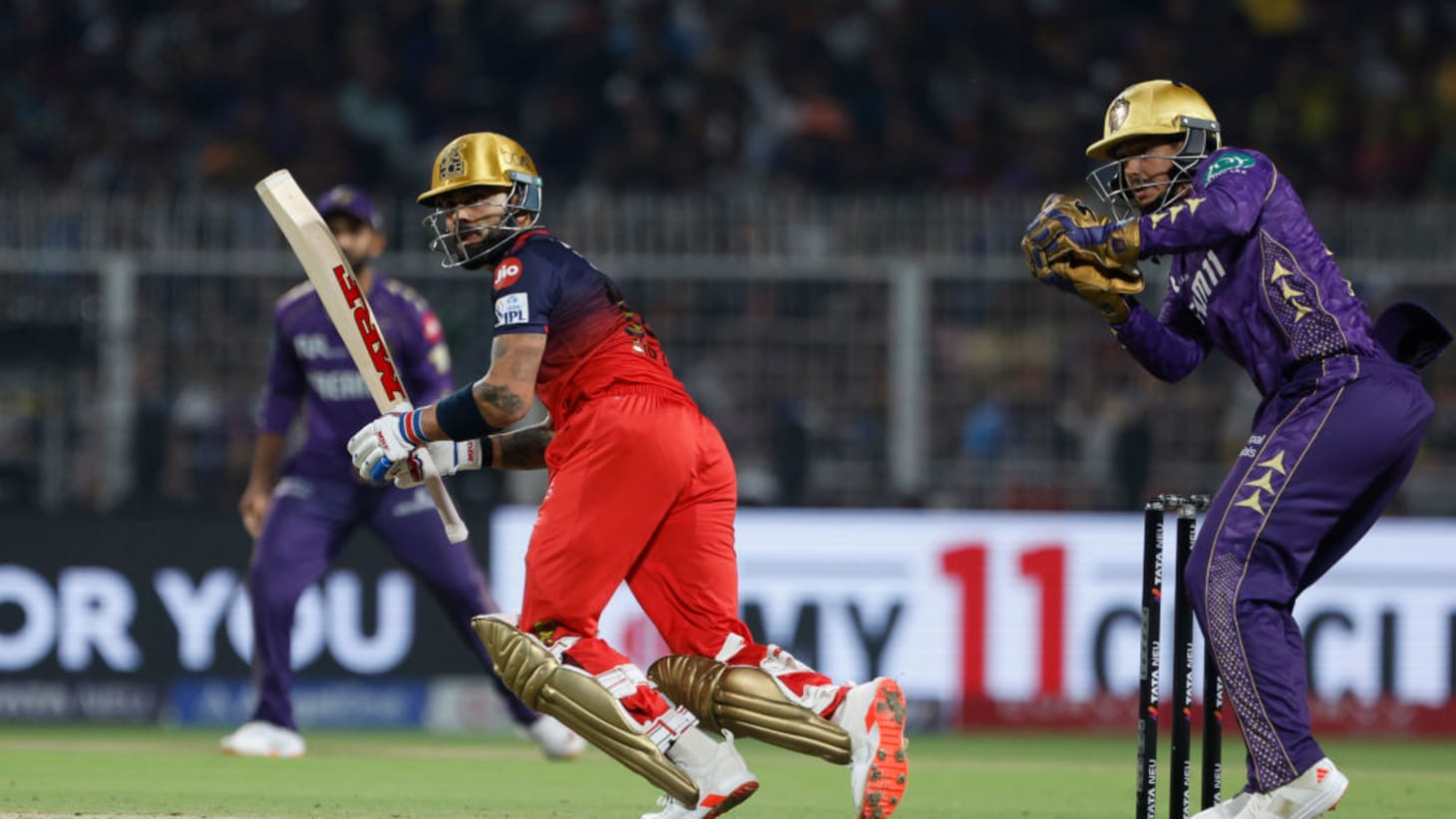
Rajasthan’s run ended in Qualifier 2, where Gujarat Titans used their second chance and booked a place in the final. The title match at the Narendra Modi Stadium in Ahmedabad on 31 May was a rematch of Qualifier 1. Gujarat were restricted to 155, and Virat Kohli led the chase with an unbeaten 75 off 42 balls, including the fastest fifty of his IPL career. RCB won by five wickets with two overs to spare and became only the third team in league history to defend the title.
Why Finishing in the Top Two Matters So Much
The 2026 playoffs showed the value of a top-two finish. Gujarat lost Qualifier 1 heavily and still reached the final because the format gave them a second chance. Sunrisers Hyderabad, despite the same number of points, were out after one defeat. That is why teams with playoff places already secured still push hard in their last league games.
The advantages of a top-two finish include:
- Two chances to reach the final instead of one, which protects against a single bad performance.
- One fewer knockout game to win, so less exposure to a freak result.
- A psychological edge, since Qualifier 1 winners go into the final rested and confident.
- Valuable recovery days for players while other teams fight through the Eliminator and Qualifier 2.
In simple terms, the IPL standings at the end of the league stage do more than decide who qualifies. They decide how hard the road to the trophy will be. In 2026, the team that finished first won the title and the team that finished second was runner-up, which shows how valuable those top spots are.
Key Lessons From the 2026 Points Table
The first lesson is that consistency beats occasional brilliance. RCB and GT avoided long losing runs, while Punjab Kings showed what a mid-season collapse can do even to a team that led the table. A team that wins steadily from the first week to the last is usually rewarded.
The second lesson is that net run rate should never be ignored. Three teams on 18 points were split only by run rate, and so were two teams on 14. Captains who chase targets quickly and avoid heavy defeats are effectively banking insurance for the end of the season. Many fans only look at the points column, but the experienced viewer knows the net run rate column often decides the IPL standings.
The third lesson is that a well-balanced squad wins titles. Teams that depended on a few big hitters, however exciting, were vulnerable when those players had a bad day. Bengaluru’s depth across batting and bowling is what lifted them from consistent league performers to back-to-back champions.
What the Standings Mean for IPL 2027
The 2026 table is already shaping the next season. The tournament’s 20th edition is taking shape, and all ten franchises confirmed their retained and released players on 17 November 2026. The deadline was moved back from 15 November to avoid clashing with an India one-day international. The retention lists reflect how each team finished. Champions RCB kept their core largely intact, as you would expect from a side that has won two titles in a row.
At the other end, the teams that finished lower in the table made bolder changes. The biggest headline was MS Dhoni’s retirement as a player, which closes a remarkable chapter for Chennai Super Kings. Sunrisers Hyderabad parted ways with Travis Head, and Delhi Capitals released Mitchell Starc, both signs that franchises are reshaping their squads after mixed seasons. Several trades were also completed before the deadline, adding to the reshuffle.
The next big date is the mini-auction, scheduled for 16 December in Goa. Franchises that finished lower in the table generally have more purse and more open slots, which gives them a chance to close the gap on the leaders. History shows that teams which bounce back from a poor season usually do so through smart auction buys, so the December auction could reshape next year’s table well before a ball is bowled.
How to Read the Points Table Like an Expert
Once you know what each column means, reading the table becomes far more rewarding. Instead of only checking which team is on top, you start to notice which sides have a hidden advantage and which are in trouble even though their position looks safe. Here are a few habits that experienced followers rely on:
- Check games in hand, because a team lower down with fewer matches played may be in a stronger position than it looks.
- Watch the net run rate column closely in the final two weeks, when ties on points become common.
- Look at the remaining fixtures, since a run of games against top-four sides is tougher than one against struggling teams.
- Follow recent form rather than overall position, as momentum often matters more than early-season results.
Following these points turns the table from a simple ranking into a way of predicting what might happen next. During the 2026 season, fans who noticed Punjab’s slowing form or Rajasthan’s rising confidence could see the late twists coming well before the final weekend.
Conclusion
The 2026 season was a reminder of why the points table is one of the most closely watched parts of the tournament. Three teams finished on 18 points, the race for fourth place lasted until the last weekend, and a team that led in May still missed the playoffs. The IPL standings told a story of consistency, depth and the role of net run rate in settling races that points alone could not.
At the top, Royal Challengers Bengaluru used first place as a platform to retain their title, while Gujarat Titans used their second chance to reach the final. Rajasthan Royals showed that a late surge can carry a team deep into the knockouts, and Punjab Kings showed how quickly a strong position can slip away. For Chennai, Mumbai and Lucknow, the season was a clear signal to rebuild, and the retention decisions show those changes are already underway.
With retentions done and the Goa auction ahead, attention is now turning to the 2027 season. Next year’s table will start from zero, and every franchise will get a fresh chance at a playoff place. If 2026 is any guide, the teams that combine consistency, squad depth and a careful eye on net run rate will be the ones at the top when the league stage ends.

