
The cricket rivalry between New Zealand and India has produced several memorable contests across Test matches, One Day Internationals (ODIs) and Twenty20 Internationals (T20Is). Both teams have developed strong international reputations through their talented batters, disciplined bowlers and ability to perform under pressure. Whenever these sides meet, cricket supporters expect competitive performances, exciting batting displays and important individual contributions.
The new zealand national cricket team vs india national cricket team match scorecard is an important resource for fans who want to understand how a match unfolds. It provides information about runs scored, wickets taken, overs bowled, individual batting performances, bowling figures and partnerships. Beyond the final result, a detailed scorecard helps readers understand which players influenced the contest and how the momentum changed throughout the innings.
The latest ODI meeting between these teams on November 13, 2026, is particularly relevant. The fourth ODI of the 2026 series is being played at Bay Oval in Mount Maunganui, New Zealand. At the time of the available live update, New Zealand were 142/3 after 22.4 overs, with Will Young and Tim Seifert making important contributions. Since the match is in progress, the figures below should be treated as a live snapshot rather than a completed result.
New Zealand vs India Match Scorecard: Latest ODI Update
The fourth ODI provides another opportunity for both teams to demonstrate their strengths in the 2026 international series. New Zealand entered the contest looking to make an impact with their batting, while India elected to field after winning the toss. The opening phase featured an attacking approach from the New Zealand batters, who looked to build a competitive total without allowing the Indian bowling attack to control the scoring rate completely.
According to the available live scorecard, New Zealand had reached 142 runs for the loss of three wickets in 22.4 overs. Will Young and Tim Seifert were among the leading contributors, while India’s bowlers had already managed to create important breakthroughs. The innings was still developing, making the middle overs particularly important for both sides.
| Match information | Details |
|---|---|
| Teams | New Zealand vs India |
| Series | India tour of New Zealand, 2026 |
| Match | Fourth ODI |
| Date | November 13, 2026 |
| Venue | Bay Oval, Mount Maunganui |
| Toss | India elected to field |
| New Zealand score at update | 142/3 |
| Overs completed | 22.4 |
| Leading New Zealand batter | Will Young |
| Other major contributor | Tim Seifert |
New Zealand Batting Performance and Important Contributions
New Zealand’s batting performance in this match has been built around the contributions of Will Young and Tim Seifert. Both players provided valuable runs during the early and middle stages of the innings. Their approach demonstrated the importance of combining controlled stroke play with selective attacking shots in ODI cricket. A strong opening partnership can provide a team with the platform needed to accelerate during the final overs.
Will Young’s Contribution
Will Young played an important role in stabilising the New Zealand innings. At the time of the available update, he had scored 59 runs from 59 deliveries, including seven boundaries and two sixes. His innings showed a balance between patience and attacking intent. By rotating the strike and finding scoring opportunities, he helped New Zealand maintain momentum during the middle overs.
Young’s contribution was especially valuable because ODI cricket requires batters to manage different phases of an innings. During the powerplay, players generally look for scoring opportunities, while the middle overs require better judgment against spin and disciplined bowling. Young’s innings reflected the importance of building a foundation before attempting a major acceleration.
Tim Seifert’s Batting Performance
Tim Seifert also made a significant contribution with the bat. He scored 58 runs from 48 deliveries, hitting six fours and three sixes before being dismissed. His positive approach helped New Zealand maintain a healthy scoring rate and put pressure on India’s bowling combination.
Seifert’s innings was an example of how aggressive batting can complement a more measured approach from the other end. When one batter focuses on maintaining stability and the other looks for boundaries, a team can build partnerships without taking unnecessary risks on every delivery. His contribution gave New Zealand an important start in the fourth ODI.
India’s Bowling Performance Against New Zealand
India’s bowling attack had the responsibility of controlling the scoring rate and taking wickets at regular intervals. The team included a combination of pace and spin options, allowing the captain to experiment with different bowling styles according to the match situation. Bowling partnerships are particularly important in ODI cricket because restricting runs at one end can create opportunities for breakthroughs at the other.
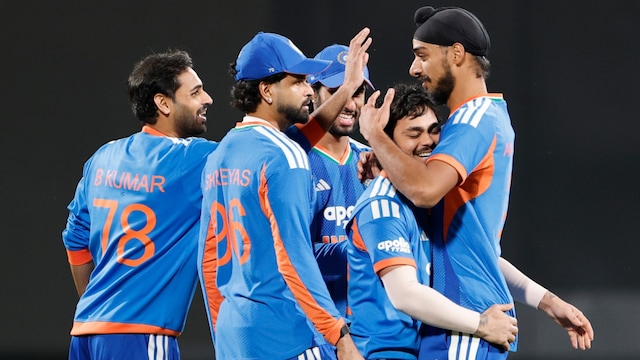
At the time of the live update, Axar Patel and Auqib Nabi had both taken wickets. Axar’s figures stood at 5.4 overs, 23 runs and one wicket, while Auqib Nabi had bowled six overs, conceding 43 runs and taking one wicket. These performances illustrated two different approaches: maintaining pressure through economical bowling and looking for wickets through attacking deliveries.
The Indian bowling unit needed to remain disciplined during the remaining overs. New Zealand’s middle and lower-middle order could potentially increase the scoring rate if the batters established another substantial partnership. For India, the main objective was to prevent the opposition from building an exceptionally high total.
Important Match Moments and Turning Points
Cricket matches between New Zealand and India often feature several important moments that influence the final result. A single wicket can change the momentum, while a strong partnership can help a team recover from an uncertain start. In a limited-overs match, the powerplay, middle overs and final overs each require different strategies.
The early partnership between Young and Seifert was one of the important features of the current contest. Both batters scored at a positive rate and helped New Zealand establish a competitive foundation. India’s bowlers eventually broke through, showing why regular wickets are essential when defending against an attacking batting lineup.
Some important aspects to examine when following this contest include:
-
Opening partnership and powerplay scoring rate.
-
Middle-over wickets and bowling economy.
-
Batting partnerships after the first breakthroughs.
-
Runs scored during the final ten overs.
These factors help explain the overall direction of a match rather than focusing exclusively on the final score.
New Zealand vs India Head-to-Head Cricket Rivalry
The rivalry between New Zealand and India has developed through numerous international competitions. Their matches have included high-scoring ODI encounters, closely contested Test series and fast-paced T20I contests. Both teams have experienced periods of success, making their meetings interesting for supporters and cricket analysts.
India traditionally brings a combination of technically skilled batters, quality spin options and experienced fast bowlers. New Zealand, meanwhile, is known for its disciplined team approach, adaptable batting lineup and ability to compete in challenging conditions. These different strengths create interesting tactical battles whenever the teams meet.
One memorable recent encounter was the 2025 ICC Champions Trophy final, in which India defeated New Zealand by four wickets after successfully chasing a target of 252 runs. India scored 254/6, while New Zealand finished with 251/7. The contest demonstrated how important middle-order partnerships and controlled run chases can be in major tournament finals.
The new zealand national cricket team vs india national cricket team match scorecard from such important encounters provides a useful way to compare individual contributions and understand how the teams have approached high-pressure situations over time.
How to Understand a Cricket Match Scorecard
A cricket scorecard contains several statistical categories that explain the performance of each team. For new viewers, some abbreviations may initially appear confusing, but understanding a few basic terms makes it much easier to follow international cricket.
Batting Statistics
The batting section generally displays the names of players, runs scored, balls faced, boundaries and strike rates. These numbers provide an overview of how effectively each batter contributed to the innings.
Runs represent the total number of runs scored by a batter, while balls faced indicate the number of deliveries they played. The strike rate measures how quickly a player scored. For example, a batter scoring 50 runs from 40 balls has a strike rate of 125. This means the batter scored 125 runs per 100 deliveries at that scoring rate.
Bowling Statistics
The bowling section displays overs bowled, maidens, runs conceded, wickets taken and economy rate. These figures help readers understand how effectively a bowler controlled the opposition’s scoring.
A bowler with a lower economy rate generally concedes fewer runs per over. However, wickets are equally important because dismissing established batters can prevent the opposition from building a large total. A bowler who takes multiple wickets can make a major difference even if their economy rate is slightly higher.
Extras and Fall of Wickets
Extras include runs that are not credited directly to an individual batter. These may come from wides, no-balls, byes and leg-byes. Although extras may appear insignificant, they can influence close matches, particularly when the final result is decided by a small margin.
The fall-of-wickets section records the team score and over at which each batter was dismissed. It helps readers understand whether a team lost wickets early, experienced a middle-order collapse or maintained stability throughout the innings.
Different Formats of New Zealand vs India Matches
The two teams compete in three major international formats, and each format requires a different approach to batting, bowling and match preparation. Understanding these differences helps readers interpret scorecards more accurately.
One Day International Matches
ODI cricket consists of 50 overs per team. It requires a combination of defensive judgment, attacking stroke play and effective bowling changes. Batters must manage their innings carefully because scoring too quickly can lead to unnecessary wickets, while scoring too slowly can leave the team with an insufficient total.
The fourth ODI of the November 2026 series is an example of this format. The new zealand national cricket team vs india national cricket team match scorecard allows supporters to follow the progress of the innings, assess individual performances and understand how the bowling side responds to different batting strategies.
Test Cricket
Test cricket is the longest international format and can continue for up to five days. Unlike limited-overs cricket, teams have more opportunities to recover from difficult situations. Batting partnerships, patience, pitch conditions and bowling endurance become particularly important.
India and New Zealand have experienced several memorable Test contests. Their 2024 Test series in India attracted considerable attention, with New Zealand achieving a historic 3-0 series victory. These matches demonstrated the importance of adapting to different pitch conditions and maintaining consistency across multiple innings.
T20 International Matches
T20I cricket is played over 20 overs per team. The shorter format encourages aggressive batting, innovative shots and attacking bowling strategies. Teams generally look to maximise their scoring opportunities during the powerplay and accelerate further during the final overs.

The new zealand national cricket team vs india national cricket team match scorecard in T20 matches is particularly interesting because individual performances can change the direction of a contest within a few overs. A quick half-century, an economical bowling spell or an outstanding fielding effort can have a substantial impact on the result.
Players Who Can Influence New Zealand vs India Matches
Individual performances frequently determine the outcome of international cricket matches. Both teams have players capable of changing the momentum through batting, bowling and fielding contributions.
For India, experienced batters and developing young players provide different strengths to the lineup. Top-order batters are expected to establish partnerships, middle-order players must manage difficult situations, and finishers are responsible for accelerating the scoring rate when required. India’s bowling attack also benefits from having both pace and spin options.
New Zealand similarly possesses a balanced cricketing structure. Its batters are capable of playing technically sound innings as well as attacking the opposition during important phases. Its fast bowlers can use movement, bounce and variations to challenge batters, while its spin options provide control during the middle overs.
Some of the important performance indicators for individual players include batting average, strike rate, bowling economy, wickets taken and fielding contributions. Looking at these statistics together gives a more complete picture than simply checking the number of runs scored.
Why Fans Follow the Complete Match Scorecard
A complete scorecard is useful for more than checking which team won. It provides detailed information that helps supporters understand the reasons behind a result. Someone who missed the live broadcast can examine the batting order, identify the highest scorer and determine which bowlers made important breakthroughs.
The new zealand national cricket team vs india national cricket team match scorecard also helps cricket enthusiasts compare performances across different matches. For example, a reader can examine whether a batter has consistently scored runs against a particular bowling attack or whether a bowler has performed effectively in different playing conditions.
Another important advantage is that scorecards support statistical analysis. Cricket followers can compare partnerships, calculate run rates and evaluate the effectiveness of batting strategies. These details are useful for sports writers, fantasy cricket enthusiasts and people who enjoy understanding the tactical side of international cricket.
What Makes New Zealand vs India Matches Interesting?
One major reason behind the popularity of this rivalry is the contrasting cricketing environments in which the two teams play. New Zealand’s home conditions can offer movement and bounce for fast bowlers, while Indian pitches often provide different challenges depending on the venue and surface. Players must adjust their techniques and strategies accordingly.
Another interesting aspect is the balance between experience and young talent. Both countries regularly introduce promising players into their international squads while maintaining experienced performers who understand the demands of major competitions. This combination creates opportunities for new players to establish themselves against quality international opposition.
The tactical decisions made by captains also add another dimension. Decisions about bowling changes, field placements, batting order and powerplay utilisation can influence the match significantly. Consequently, the new zealand national cricket team vs india national cricket team match scorecard offers a valuable record of the performances that shape this competitive international rivalry.
Conclusion
The cricket rivalry between New Zealand and India continues to attract attention because both teams possess talented players, competitive squads and different approaches to international cricket. Their encounters across ODI, Test and T20I formats provide plenty of opportunities for memorable performances and exciting contests.
The latest fourth ODI on November 13, 2026, at Bay Oval has already featured valuable batting contributions from Will Young and Tim Seifert, while India’s bowlers have made important breakthroughs. However, the available figures represent an ongoing match update, so the final result and completed innings statistics should be checked after the match concludes.
Overall, the new zealand national cricket team vs india national cricket team match scorecard remains an important resource for anyone interested in following international cricket. By examining batting figures, bowling performances, partnerships, extras and match situations, readers can develop a much clearer understanding of how these two competitive teams perform against each other.

