
South Africa vs India Match Scorecard: T20 World Cup 2026
The rivalry between the South Africa national cricket team and the India national cricket team has produced memorable contests across Test matches, One Day Internationals (ODIs), and Twenty20 Internationals (T20Is). Both teams feature talented batters, quality fast bowlers, skilled spinners, and experienced players who can change the direction of a match within a few overs. Their encounters attract cricket fans worldwide because of the competitive atmosphere and tactical battles.
One notable recent encounter took place on 22 February 2026 during the Super Eight stage of the ICC Men’s T20 World Cup at Narendra Modi Stadium in Ahmedabad. South Africa batted first and scored 187 runs for seven wickets in 20 overs. India struggled during the chase and were dismissed for 111 in 18.5 overs, giving South Africa a 76-run victory. David Miller played a crucial innings, while Marco Jansen delivered an outstanding bowling performance.
This article explores the south africa national cricket team vs india national cricket team match scorecard, including the match summary, leading batting performances, bowling figures, important turning points, and lessons from the contest.
South Africa vs India Match Overview
The 2026 T20 World Cup encounter demonstrated how quickly a T20 match can change. India initially applied pressure with the ball, reducing South Africa to 20 runs for three wickets. However, South Africa’s middle order recovered with aggressive stroke play and a valuable partnership between David Miller and Dewald Brevis.
India’s chase began poorly as South Africa’s bowlers maintained pressure during the powerplay. The early wickets forced the Indian batters to rebuild rather than attack freely. Shivam Dube produced the strongest individual contribution for India, but the team could not establish the partnerships needed to approach the target.
| Match Detail | Information |
|---|---|
| Tournament | ICC Men’s T20 World Cup 2026 |
| Match stage | Super Eight |
| Date | 22 February 2026 |
| Venue | Narendra Modi Stadium, Ahmedabad |
| Format | T20 International |
| Toss winner | South Africa |
| Toss decision | Elected to bat |
| South Africa score | 187/7 in 20 overs |
| India score | 111 all out in 18.5 overs |
| Match result | South Africa won by 76 runs |
| Player of the Match | David Miller |
The south africa national cricket team vs india national cricket team match scorecard highlights the importance of recovering from early setbacks, building partnerships, and using bowling variations effectively during a high-pressure international match.
South Africa Batting Scorecard
South Africa’s innings began under pressure as India’s bowlers took important early wickets. The top order could not immediately establish control, leaving the middle order with the responsibility of rebuilding the innings. Instead of allowing the innings to collapse, David Miller and Dewald Brevis counterattacked and changed the momentum through confident stroke play.
Miller scored 63 runs from 35 deliveries, combining controlled batting with powerful hitting. Brevis contributed 45 runs from 29 balls, helping South Africa recover through a significant partnership. Tristan Stubbs then provided an important finishing contribution with an unbeaten 44 from 24 deliveries. Their efforts helped South Africa reach a competitive total of 187/7.
South Africa innings: 187/7 (20 overs)
| Batter | Runs | Balls | 4s | 6s |
|---|---|---|---|---|
| David Miller | 63 | 35 | 7 | 3 |
| Dewald Brevis | 45 | 29 | 3 | 3 |
| Tristan Stubbs | 44* | 24 | — | — |
| Other batters | Contributed to total | — | — | — |
| Extras | Included in total | — | — | — |
| Total | 187/7 | 20 overs | — | — |
Note: The table highlights the leading South African contributions rather than reproducing every batter’s dismissal and boundary statistics. An asterisk indicates a batter remained not out.
South Africa’s innings illustrated the value of middle-order depth. Even after losing early wickets, the team retained enough attacking ability to rebuild and accelerate. Miller’s experience was particularly important because he managed the innings while maintaining a scoring rate suitable for the shortest format.
India Batting Scorecard
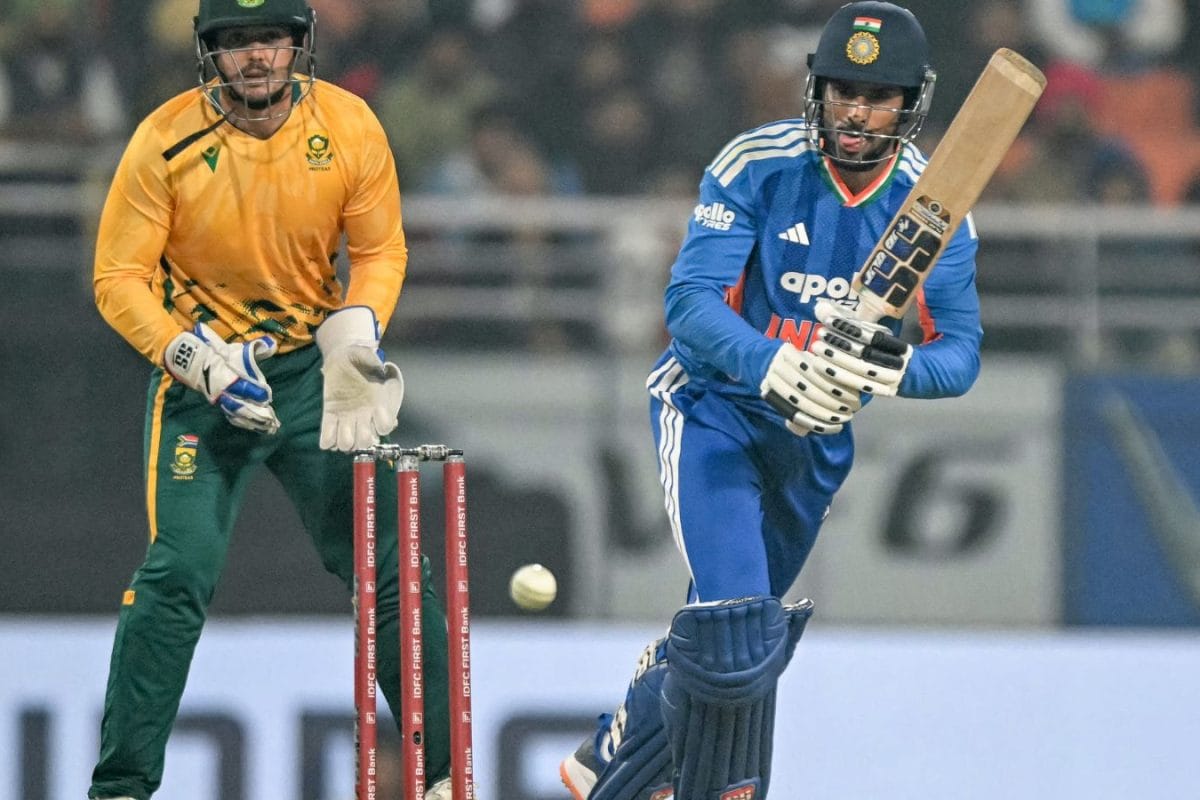
India entered the chase needing 188 runs to win, but the innings quickly became difficult. South Africa’s bowlers attacked the stumps, varied their pace, and made scoring uncomfortable during the opening overs. India lost three wickets inside the powerplay, leaving the middle order with a substantial rebuilding task.
Captain Suryakumar Yadav attempted to stabilize the innings, while Shivam Dube provided the most notable resistance. Dube scored 42 runs from 37 balls, including three sixes. Washington Sundar and Hardik Pandya made smaller contributions, but wickets continued to fall before India could build a match-changing partnership. South Africa eventually bowled India out for 111 in 18.5 overs.
India innings: 111 all out (18.5 overs)
| Batter | Runs | Balls | 4s | 6s |
|---|---|---|---|---|
| Ishan Kishan | 0 | 4 | 0 | 0 |
| Abhishek Sharma | 15 | 12 | 2 | 1 |
| Tilak Varma | 1 | 2 | 0 | 0 |
| Suryakumar Yadav | 18 | 22 | 2 | 0 |
| Washington Sundar | 11 | 11 | 0 | 1 |
| Shivam Dube | 42 | 37 | 1 | 3 |
| Hardik Pandya | 18 | 17 | 0 | 1 |
| Rinku Singh | 0 | 2 | 0 | 0 |
| Arshdeep Singh | 1 | 2 | 0 | 0 |
| Varun Chakaravarthy | 0* | 3 | 0 | 0 |
| Jasprit Bumrah | 0 | 1 | 0 | 0 |
| Extras | 5 | — | — | — |
| Total | 111 all out | 18.5 overs | — | — |
India’s innings showed how early wickets can affect a team’s scoring strategy. With the required run rate increasing, the batters had limited opportunities to settle into their innings. Dube’s resistance kept India competitive for a period, but the lack of partnerships prevented a sustained recovery.
Bowling Performance and Key Figures
Bowling was one of the biggest differences between the two sides. South Africa used its pace attack effectively and supported it with disciplined spin bowling. Marco Jansen was particularly impressive, claiming four wickets while conceding 22 runs. His ability to vary his pace and maintain pressure made it difficult for Indian batters to establish rhythm.
Keshav Maharaj also played an important role, taking three wickets for 24 runs. Corbin Bosch contributed two wickets for 12 runs in three overs, while Aiden Markram removed Ishan Kishan early. Lungi Ngidi’s economical spell further restricted India’s scoring options. India’s Jasprit Bumrah had also bowled well, finishing with three wickets for 15 runs, but the other bowlers could not prevent South Africa from reaching a strong total.
| Bowler | Team | Overs | Runs | Wickets |
|---|---|---|---|---|
| Marco Jansen | South Africa | 3.5 | 22 | 4 |
| Keshav Maharaj | South Africa | 3 | 24 | 3 |
| Corbin Bosch | South Africa | 3 | 12 | 2 |
| Jasprit Bumrah | India | 4 | 15 | 3 |
| Arshdeep Singh | India | 4 | 28 | 2 |
The table lists selected leading bowling performances, not every bowler’s figures.
Major Turning Points of the Match
Several important moments shaped the outcome of this T20 World Cup contest. South Africa’s recovery after losing three early wickets was the first major turning point. Rather than allowing India to dominate the innings, Miller and Brevis rebuilt the total through aggressive but calculated batting.
The middle-order partnership shifted the pressure back onto India’s bowlers. Stubbs then accelerated during the final overs, helping South Africa finish with 187 runs. That total gave the bowling attack a strong platform to defend.
India’s powerplay was another decisive phase. Losing three wickets for 31 runs left the chasing side struggling to maintain the required scoring rate. South Africa’s bowlers continued taking wickets instead of allowing India to develop a substantial partnership.
The most important moments included:
-
Early South African setbacks: India made a promising start with the ball.
-
Miller and Brevis partnership: Their 97-run stand from 51 balls changed the momentum.
-
Stubbs’ late acceleration: His unbeaten 44 helped strengthen South Africa’s total.
-
India’s powerplay collapse: Three early wickets placed the chase under pressure.
-
Jansen’s four wickets: His spell helped finish the match emphatically.
These phases explain why the final margin was much larger than the contest initially suggested.
Player of the Match: David Miller
David Miller earned Player of the Match recognition for his outstanding contribution with the bat. His 63 runs from 35 deliveries provided the stability and acceleration South Africa needed after its difficult start. He combined well-timed boundaries with powerful shots, forcing India’s bowlers to change their plans.
Miller’s innings was important not only because of the runs scored but also because of the situation in which he scored them. South Africa had lost three wickets for just 20 runs, making another quick dismissal potentially damaging. Miller instead helped rebuild the innings and created opportunities for the other batters to attack.
His performance demonstrated the value of experience in T20 cricket. A middle-order batter must recognize when to stabilize an innings and when to increase the scoring rate. Miller balanced those responsibilities effectively, helping South Africa reach a total that proved too challenging for India.

Match Analysis: Why South Africa Won
South Africa won because it recovered from an unstable beginning, scored aggressively in the middle overs, and defended its total with disciplined bowling. The partnership between Miller and Brevis was central to the recovery, while Stubbs ensured the innings finished strongly. Their combined contributions prevented India’s early bowling success from determining the result.
The bowling unit then executed its plans effectively. South Africa targeted India’s top order, restricted the scoring rate, and took wickets at regular intervals. Jansen and Maharaj were particularly influential, while Bosch and Ngidi helped maintain pressure. The Indian batters never found the sustained partnerships needed for a successful chase.
India’s bowling performance was not without merit. Bumrah took three wickets and helped South Africa lose early momentum. However, the team struggled to contain the middle-order counterattack. During the chase, India’s early wickets created a similar problem in reverse: the remaining batters had to balance recovery with an increasingly demanding target.
The south africa national cricket team vs india national cricket team match scorecard therefore illustrates the importance of middle-order resilience, effective bowling changes, and consistent execution in T20 cricket.
What This Match Means for the India–South Africa Rivalry
India and South Africa have contrasting but complementary cricketing strengths. India often relies on batting depth, spin options, and adaptable middle-order players. South Africa brings power hitting, fast bowling, and the ability to apply pressure in important phases. When these qualities meet, the result can depend on a handful of overs or a single partnership.
The 2026 T20 World Cup meeting reinforced the importance of handling pressure in knockout-style tournament stages. Although South Africa initially faced a difficult situation, its middle order recovered. India, meanwhile, could not repeat that recovery while chasing.
For supporters, scorecards provide more than a final result. They show which batters controlled the innings, which bowlers created breakthroughs, and how momentum changed. Comparing scores across different formats also requires context: a total of 187 can be highly competitive in T20 cricket, but its significance depends on the pitch, opposition, and match conditions.
Key Takeaways from the Scorecard
The match provides several useful lessons for cricket followers and analysts:
-
Partnerships can be more important than a strong start alone.
-
Middle-order batters need to balance stability with acceleration.
-
Early wickets can make a successful T20 chase considerably harder.
-
Bowling variations and economical spells can create pressure even without regular wickets.
-
A strong finish in the final overs can turn a competitive total into a match-winning one.
-
Individual performances must be considered alongside the team’s overall result.
These lessons apply to international T20 cricket more broadly. Scorecards help explain not just who won, but how the match was shaped by individual decisions and team strategies.
Conclusion
The South Africa national cricket team versus India national cricket team contest at the 2026 T20 World Cup was a memorable example of resilience and effective execution. South Africa recovered from 20/3 to post 187/7, powered by David Miller’s 63, Dewald Brevis’ 45, and Tristan Stubbs’ unbeaten 44. India struggled during the chase and were dismissed for 111 in 18.5 overs.
Marco Jansen’s four-wicket haul and Keshav Maharaj’s three wickets helped South Africa secure a convincing 76-run victory. Shivam Dube was India’s leading scorer with 42 runs, while Jasprit Bumrah delivered an impressive spell with the ball.
For readers searching for the south africa national cricket team vs india national cricket team match scorecard, this encounter highlights the importance of partnerships, bowling discipline, and composure under pressure. It also shows why India–South Africa matches remain compelling across international cricket formats.

