
The cricket rivalry between India and the West Indies represents an exciting combination of sporting excellence, historical achievements, individual brilliance, and competitive spirit. From unforgettable Test matches to entertaining limited-overs encounters, both teams have produced remarkable performances that continue to attract cricket enthusiasts worldwide. While India is recognised for its technically accomplished batting and versatile bowling attack, the West Indies have established a reputation for explosive batting, athletic fielding, and natural cricketing talent.
The india national cricket team vs west indies cricket team match scorecard provides a detailed understanding of how these encounters unfold. It allows supporters to examine individual performances, batting partnerships, bowling figures, scoring patterns, and decisive moments that influence the final result. Beyond revealing the winning team, a comprehensive scorecard explains the contributions of different players throughout the contest.
In 2026, cricket continues to evolve through innovative batting approaches, advanced performance analysis, and increasingly competitive international tournaments. Understanding match statistics has become essential for followers who want to appreciate the tactical decisions and individual efforts behind every India-West Indies encounter.
India vs West Indies Cricket Rivalry: An Overview
India and the West Indies share a cricketing relationship that dates back to 1948, when the two teams first competed in a Test series. During the 1970s and 1980s, the West Indies established themselves as one of the most formidable teams in international cricket. Legendary cricketers such as Viv Richards, Clive Lloyd, Malcolm Marshall, and Michael Holding helped shape an era of Caribbean dominance. India gradually developed into a stronger international competitor through exceptional batting, effective spin bowling, and improved cricketing infrastructure.
The rivalry has undergone a significant transformation over the decades. India has become a major force across international cricket formats, while the West Indies remain particularly dangerous in limited-overs competitions. Their encounters often feature contrasting playing styles, unpredictable momentum changes, and outstanding individual performances. These characteristics make their matches appealing to both traditional cricket followers and younger audiences who enjoy aggressive modern cricket.
Latest India vs West Indies Match Scorecard 2026
The September–October 2026 white-ball series provided another entertaining chapter in the rivalry. India secured the three-match ODI series by a 2–1 margin, while the five-match T20 International series finished level at 2–2 after the final encounter was abandoned because of rain. The tour featured impressive centuries, challenging run chases, effective bowling performances, and several high-scoring contests.
Fans searching for the india national cricket team vs west indies cricket team match scorecard can examine these recent encounters to understand how both teams approached different match situations. India’s batting depth remained an important strength, while the West Indies demonstrated their ability to challenge substantial targets through powerful stroke-making and determined partnerships. The competitive nature of the series reinforced the importance of adaptability in contemporary international cricket.
India vs West Indies 2026 Match Results and Statistics
The following table summarises the five T20 International encounters played during October 2026. It highlights the team totals, match venues, dates, and final outcomes, providing a convenient overview of the series.
| Match and Date | Venue | India Score | West Indies Score | Result |
|---|---|---|---|---|
| 1st T20I, 6 October 2026 | Lucknow | 172/2 | 171 | India won by 8 wickets |
| 2nd T20I, 9 October 2026 | Ranchi | 249/5 | 252/4 | West Indies won by 6 wickets |
| 3rd T20I, 11 October 2026 | Indore | 223 | 209/7 | India won by 14 runs |
| 4th T20I, 14 October 2026 | Hyderabad | 223 | 247/3 | West Indies won by 24 runs |
| 5th T20I, 17 October 2026 | Bengaluru | 118/5 | Did not bat | No result |
The series illustrates how quickly momentum can change in T20 cricket. Even exceptionally high totals do not necessarily guarantee victory. Effective bowling variations, intelligent field placements, and consistent batting under pressure remain essential for producing favourable results.
Detailed Analysis of the India vs West Indies T20I Series 2026
India’s Impressive Opening Victory
The opening T20I in Lucknow on 6 October 2026 demonstrated India’s ability to control a run chase through aggressive batting. The West Indies scored 171 runs before being dismissed in 19.1 overs. India responded with 172/2 in 14.4 overs, completing a comfortable eight-wicket victory. Shreyas Iyer delivered an outstanding unbeaten century, scoring 102 runs from just 43 deliveries.
India’s performance highlighted the importance of maintaining an aggressive approach without sacrificing batting stability. By keeping wickets available and consistently finding boundaries, the Indian batters prevented the required run rate from becoming a significant concern.
West Indies Fight Back in Ranchi
The second T20I produced an extraordinary batting contest. India registered 249/5, but the West Indies successfully chased the challenging target by reaching 252/4 in 18.3 overs. Shai Hope played a remarkable unbeaten innings of 102 runs from 45 deliveries, demonstrating exceptional composure and attacking ability.
The encounter provided an important example of how modern T20 batting has transformed traditional expectations. A total that might once have appeared nearly impossible to chase can now be overcome through aggressive partnerships, intelligent shot selection, and consistent boundary scoring.
A Competitive Finish to the Series
India regained the advantage in Indore before the West Indies responded with a 24-run victory in Hyderabad. The deciding encounter in Bengaluru was interrupted by rain, leaving India at 118/5 after 7.4 overs. With no further play possible, the series concluded without an outright winner.
Shai Hope received the Player of the Series award after accumulating 261 runs. Keemo Paul also delivered an impressive bowling performance, claiming eight wickets across three matches. These contributions reflected the growing competitiveness of the Caribbean side.
India vs West Indies ODI Series 2026: Performance Review
The 2026 ODI series produced several memorable batting performances. One of the most remarkable encounters occurred in Guwahati on 30 September, when the West Indies posted 405/7 in their allotted 50 overs. India responded by reaching 406/2 in 43.3 overs, completing an extraordinary eight-wicket victory. Shubman Gill played the defining innings, scoring an unbeaten 223 from 133 deliveries.
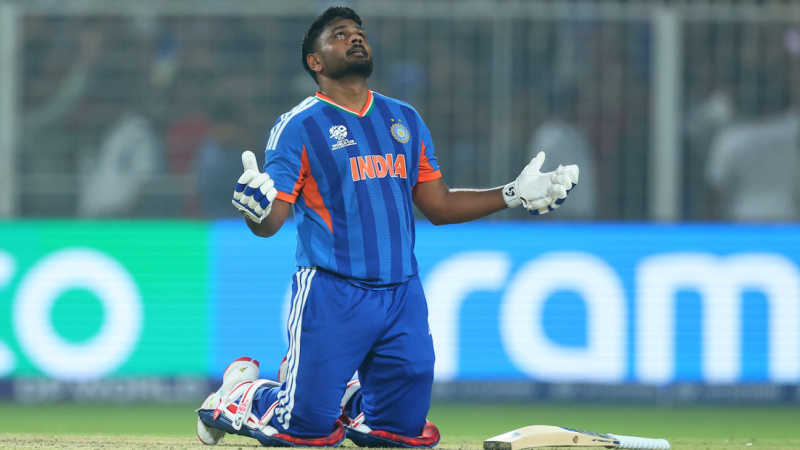
The india national cricket team vs west indies cricket team match scorecard from this encounter demonstrates how batting strategies in ODI cricket continue to develop. Rather than allowing a demanding target to create excessive pressure, successful batting teams increasingly combine calculated aggression with effective strike rotation. India’s eventual 2–1 series victory offered valuable preparation for future international competitions, particularly the 2027 ODI World Cup.
India vs West Indies ICC T20 World Cup 2026 Scorecard
Another significant encounter took place on 1 March 2026 during the Super Eight stage of the ICC Men’s T20 World Cup at Eden Gardens in Kolkata. The West Indies completed their innings with 195/4 in 20 overs, setting India a challenging target of 196 runs. India successfully reached 199/5 in 19.2 overs, securing victory by five wickets.
Sanju Samson emerged as the standout performer with an unbeaten 97 from 50 deliveries. His innings demonstrated how an accomplished batter can balance aggression with responsibility during a high-pressure tournament match. India’s victory secured their progression to the semifinals, while the West Indies were eliminated from the competition. The encounter remains an excellent example of the importance of individual responsibility in international cricket.
Understanding the Components of a Cricket Match Scorecard
A cricket scorecard contains much more information than the final team totals. It records individual batting achievements, bowling efficiency, dismissals, extras, partnerships, and the progression of an innings. For experienced cricket followers, these statistics help explain why a particular team succeeded. For beginners, understanding these figures makes international cricket easier to follow.
The india national cricket team vs west indies cricket team match scorecard generally includes the following essential details:
-
Batting statistics, including runs, balls faced, boundaries, and strike rates.
-
Bowling figures, covering overs, runs conceded, wickets, and economy rates.
-
Fall of wickets and important batting partnerships.
-
Extras, including wides, no-balls, byes, and leg-byes.
-
Match result, venue, toss information, and individual awards.
Each component contributes to a more complete understanding of the contest. For example, a batter scoring 60 runs from 30 deliveries may have a greater influence on a T20 match than someone scoring 70 runs from 60 deliveries. However, the importance of each performance also depends on the match situation.
Batting Performances That Influence Match Results
India has traditionally benefited from technically accomplished batters who can construct substantial innings across different playing conditions. Players such as Shubman Gill, KL Rahul, Sanju Samson, and Shreyas Iyer demonstrate different approaches to batting. Some focus on building partnerships before accelerating, while others use aggressive stroke-making to establish immediate scoring momentum.
The West Indies frequently rely on powerful hitting combined with increasingly effective innings management. Shai Hope’s recent performances illustrate how technically controlled batting can complement the aggressive approach associated with Caribbean cricket. Players capable of adjusting their scoring tempo according to match requirements often become particularly valuable during demanding run chases. Examining individual batting figures alongside team totals helps supporters understand the actual contribution of each player rather than judging performances exclusively by runs scored.
Bowling Performances and Their Importance in India-West Indies Matches
Bowling remains one of the most influential aspects of encounters between these teams. India’s bowling approach often combines accurate fast bowling, effective spin, and tactical variations. Spinners can restrict scoring during the middle overs, while fast bowlers frequently target early breakthroughs and important wickets during the closing stages of an innings.
The West Indies possess bowlers capable of generating pace, bounce, and unpredictable variations. Their effectiveness depends on maintaining control against technically strong opposition. When examining the india national cricket team vs west indies cricket team match scorecard, supporters should consider economy rates alongside wicket totals. A bowler who restricts scoring without claiming a wicket can still influence the match by increasing pressure and creating opportunities for teammates at the opposite end.
India vs West Indies Test Cricket Match Analysis
Test cricket presents a different challenge compared with limited-overs encounters. Batters must demonstrate patience, concentration, defensive technique, and the ability to manage changing pitch conditions. Bowlers must maintain accuracy across longer spells while developing strategies to dismiss well-established opposition players.
During the October 2025 Test series, India secured an innings-and-140-run victory in Ahmedabad. The hosts followed that performance with a seven-wicket victory in New Delhi. In the second Test, India declared their first innings at 518/5, while the West Indies recorded innings totals of 248 and 390. India eventually reached 124/3 to complete the victory. These performances highlighted India’s ability to establish substantial first-innings advantages while maintaining bowling pressure throughout extended contests.
How Playing Conditions Affect India vs West Indies Results
Playing conditions can significantly influence cricket matches. Indian pitches frequently provide assistance to spin bowlers as surfaces deteriorate, particularly during longer formats. However, several Indian venues also offer favourable batting conditions in limited-overs cricket, allowing players to score freely through boundaries and effective running between the wickets.
Caribbean venues provide a diverse range of conditions rather than a single predictable playing environment. Certain grounds offer assistance to fast bowlers, while others favour spin or aggressive batting. Boundary dimensions, humidity, wind direction, pitch preparation, and evening dew can all influence tactical decisions. Successful teams assess these factors before selecting their playing combinations and continue adjusting their strategies as conditions evolve throughout the match.
The Importance of Batting Partnerships
A strong batting partnership can transform the direction of a cricket match. When two batters communicate effectively, rotate the strike, and identify scoring opportunities, they reduce pressure on the batting side. Partnerships also force opposition captains to reconsider bowling combinations and adjust field placements.

The india national cricket team vs west indies cricket team match scorecard helps identify partnerships that stabilised an innings or accelerated the scoring rate. For example, a team recovering from two early wickets may benefit more from a controlled 80-run partnership than from several short, aggressive innings. In contrast, a rapid partnership during the final five overs of a T20 match can dramatically increase the target. Recognising these differences helps cricket followers appreciate the tactical importance of teamwork.
Key Factors That Determine India vs West Indies Match Outcomes
International cricket matches are rarely decided by a single factor. Although individual centuries and exceptional bowling figures receive considerable attention, collective execution often determines the eventual winner. Teams that respond effectively to changing situations generally improve their chances of success.
Several important factors consistently influence India-West Indies encounters:
-
Effective use of powerplay overs and fielding restrictions.
-
Strong middle-order partnerships during challenging situations.
-
Accurate bowling and controlled execution in the death overs.
-
Reliable catching, ground fielding, and boundary prevention.
-
Intelligent captaincy and appropriate tactical adjustments.
These elements become particularly important during closely contested matches. A missed catch, unnecessary extra, or poorly executed final over can change the outcome even when a team has performed well during most of the contest.
The Role of Technology in Modern Cricket Scorecards
Technology has transformed the way cricket enthusiasts follow international matches. Traditional scorecards primarily recorded essential batting and bowling statistics. Modern platforms can provide additional insights through scoring progression, ball-by-ball information, partnership breakdowns, wagon wheels, and bowling performance analysis.
Advanced statistics allow supporters to understand which phases of an innings produced the most significant momentum changes. Analysts can examine how batters respond to different bowling styles, which deliveries create scoring difficulties, and how frequently players find boundaries. Technology also supports decision-making through systems such as the Decision Review System, ball tracking, and edge detection. Together, these developments have made cricket analysis more detailed and accessible to audiences with different levels of sporting knowledge.
How to Read India vs West Indies Live Cricket Scores
Reading live cricket scores becomes easier once supporters understand common statistical terms. A score of 150/4 means the batting team has accumulated 150 runs while losing four wickets. If the score appears after 15 overs, the innings has progressed through 90 legal deliveries. During a run chase, the required run rate indicates how quickly the batting team must score to reach its target.
The india national cricket team vs west indies cricket team match scorecard also provides information about individual players and their contributions. An asterisk beside a batter’s score indicates that the player remains not out. Bowling figures such as 3/28 indicate that a bowler has taken three wickets while conceding 28 runs. Understanding these basic details allows beginners to interpret match developments independently without relying entirely on commentary.
Future Outlook of the India-West Indies Cricket Rivalry
The competitive performances witnessed during 2026 suggest that future encounters between India and the West Indies could continue to provide entertaining cricket. India benefits from extensive domestic competitions, emerging talent, and adaptable players capable of performing across multiple formats. The West Indies also possess exciting young cricketers who can contribute to the development of their international teams.
With preparations for the 2027 ODI World Cup becoming increasingly important, both teams have reasons to strengthen their limited-overs combinations. Consistent batting partnerships, dependable bowling options, and effective squad management will remain central to their development. Future encounters will provide opportunities for established professionals and emerging players to demonstrate their abilities under international pressure.
Frequently Asked Questions
1. Who won the India vs West Indies T20I series in 2026?
The October 2026 T20I series finished in a 2–2 draw. Both teams won two matches, while the fifth encounter in Bengaluru was abandoned because of rain.
2. What was India’s result against the West Indies in the 2026 ODI series?
India won the three-match ODI series by a 2–1 margin. The series featured several impressive batting performances, including India’s successful chase of 406 runs in Guwahati.
3. Who scored a double century against the West Indies in 2026?
Shubman Gill scored an unbeaten 223 runs from 133 deliveries during the second ODI in Guwahati on 30 September 2026, helping India secure an eight-wicket victory.
4. What information does an India vs West Indies cricket scorecard contain?
A comprehensive scorecard includes team totals, individual batting statistics, bowling figures, extras, partnerships, fall of wickets, match results, and other relevant information about the encounter.
5. Who won the India vs West Indies T20 World Cup match in 2026?
India defeated the West Indies by five wickets on 1 March 2026 at Eden Gardens in Kolkata. Sanju Samson received the Player of the Match award for his unbeaten 97-run innings.
6. Why are India vs West Indies cricket matches popular?
These encounters combine historical significance, contrasting playing styles, talented international cricketers, aggressive batting, and competitive bowling. Their unpredictable nature frequently creates exciting moments for cricket supporters.
7. What happened in the latest India vs West Indies T20I match?
The fifth T20I on 17 October 2026 ended without a result because of rain. India had reached 118/5 in 7.4 overs before play was permanently suspended.
Conclusion
The cricketing rivalry between India and the West Indies continues to represent an engaging combination of historical achievements, modern sporting strategies, individual excellence, and competitive entertainment. From traditional Test cricket to high-scoring ODI encounters and explosive T20 International matches, both teams have contributed memorable performances that reflect the changing nature of international cricket.
The india national cricket team vs west indies cricket team match scorecard offers supporters an opportunity to explore these encounters beyond the final result. Detailed batting figures, bowling statistics, partnerships, scoring rates, and match conditions help explain how victories are achieved and why certain performances become particularly significant.
The competitive white-ball series of 2026 demonstrated that both teams possess players capable of transforming difficult situations into outstanding results. As international cricket continues to evolve, future India-West Indies encounters will provide fresh opportunities for emerging talent, established professionals, and passionate supporters to experience another chapter in this remarkable sporting rivalry.

