
Cricket matches between India and the West Indies have always attracted tremendous attention from fans worldwide. From remarkable batting performances and dramatic run chases to exceptional bowling spells, the rivalry has produced several unforgettable moments. Both teams bring different playing styles, tactical approaches and talented cricketers to the field, making their encounters particularly entertaining across international cricket formats.
Fans searching for the india national cricket team vs west indies cricket team match scorecard want more than just the final result. They are interested in individual batting scores, bowling figures, partnerships, wickets, match-winning performances and important turning points that influenced the outcome.
The 2026 cricket season added another exciting chapter to this historic rivalry. India secured a 2–1 ODI series victory, while the West Indies demonstrated their competitive strength by drawing the five-match T20I series 2–2. The final T20I in Bengaluru ended without a result because of rain. Understanding these recent performances provides a clearer picture of both teams and their evolving strategies in modern international cricket.
India vs West Indies Latest Match Scorecard 2026
As of November 26, 2026, the most recent men’s international encounter between India and the West Indies took place on October 17, 2026, at the M. Chinnaswamy Stadium in Bengaluru. The fifth T20 international was expected to determine the winner of the series. However, persistent rainfall prevented both teams from completing the contest. The match was initially reduced to nine overs per side, with West Indies winning the toss and choosing to bowl first.
India reached 118 runs for the loss of five wickets in 7.4 overs before another interruption brought proceedings to an early conclusion. Ishan Kishan contributed an aggressive 30 runs from just 10 deliveries, while Naman Dhir scored an unbeaten 24 from six balls. Keemo Paul and Shamar Springer collected two wickets each for the visitors. Although the Indian batting lineup maintained an impressive scoring rate, the West Indies did not receive an opportunity to bat. Consequently, the match ended without a result, leaving the series level at 2–2.
India vs West Indies 2026 Match Results and Scorecard Summary
The india national cricket team vs west indies cricket team match scorecard for the 2026 bilateral tour highlights how competitive white-ball cricket has become. India delivered several commanding batting performances, but the Caribbean side responded with equally impressive run chases and aggressive stroke play. The following table presents the results of the eight international fixtures played during the tour.
| Match and Date | India Score | West Indies Score | Result |
|---|---|---|---|
| 1st ODI, September 27 | 300/2 (41.4) | 295/7 (50) | India won by 8 wickets |
| 2nd ODI, September 30 | 406/2 (43.3) | 405/7 (50) | India won by 8 wickets |
| 3rd ODI, October 3 | 351/7 (50) | 352/5 (48.2) | West Indies won by 5 wickets |
| 1st T20I, October 6 | 172/2 (14.4) | 171 (19.1) | India won by 8 wickets |
| 2nd T20I, October 9 | 249/5 (20) | 252/4 (18.3) | West Indies won by 6 wickets |
| 3rd T20I, October 11 | 223 (20) | 209/7 (20) | India won by 14 runs |
| 4th T20I, October 14 | 223/9 (19.3) | 247/3 (20) | West Indies won by 24 runs |
| 5th T20I, October 17 | 118/5 (7.4) | Did not bat | No result |
The results demonstrate that neither team could consistently dominate every encounter. India displayed exceptional chasing ability throughout the ODI series, whereas the West Indies proved capable of challenging substantial totals in both limited-overs formats. Several matches featured exceptionally high scoring rates, reinforcing the importance of adaptable bowling strategies.
Detailed Analysis of the India vs West Indies ODI Series 2026
First ODI: India’s Successful Run Chase
The opening ODI took place on September 27, 2026, in Thiruvananthapuram. West Indies completed their innings with 295 runs for seven wickets, presenting India with a challenging target. However, the Indian batting lineup demonstrated excellent composure and maintained control throughout the chase.
Virat Kohli delivered an outstanding unbeaten innings of 139 runs from 88 deliveries, while Shubman Gill contributed 110 runs. India successfully reached 300/2 in 41.4 overs, securing an eight-wicket victory. The partnership demonstrated the importance of combining aggressive stroke play with intelligent strike rotation. Instead of allowing the required run rate to create pressure, India’s batters established momentum early and maintained it throughout the innings.
Second ODI: A Remarkable High-Scoring Encounter
The second ODI in Guwahati on September 30 produced one of the most entertaining matches of the series. West Indies accumulated 405/7 in their allotted 50 overs, a total that would ordinarily place considerable pressure on the opposition.
However, Shubman Gill produced an extraordinary unbeaten innings of 223 runs from 133 deliveries. India completed the chase by reaching 406/2 in just 43.3 overs. The result demonstrated the remarkable evolution of modern ODI batting, where even totals exceeding 400 runs can be successfully chased. Gill’s ability to construct a substantial innings while maintaining an exceptional scoring rate was central to India’s victory.
Third ODI: West Indies Fight Back
West Indies delivered a strong response in the third ODI at New Chandigarh on October 3, 2026. India posted a competitive total of 351/7, but the Caribbean batting lineup refused to surrender under scoreboard pressure.
The visitors reached 352/5 in 48.2 overs, winning the match by five wickets. Although India had already secured the series, the victory gave West Indies valuable confidence ahead of the T20I fixtures. It also highlighted their ability to construct successful run chases against competitive international bowling attacks. India eventually finished the ODI series with a 2–1 advantage.
India vs West Indies T20I Series 2026 Match Highlights
The india national cricket team vs west indies cricket team match scorecard from the October T20I series illustrates the growing competitiveness between these two teams in the shortest international format.
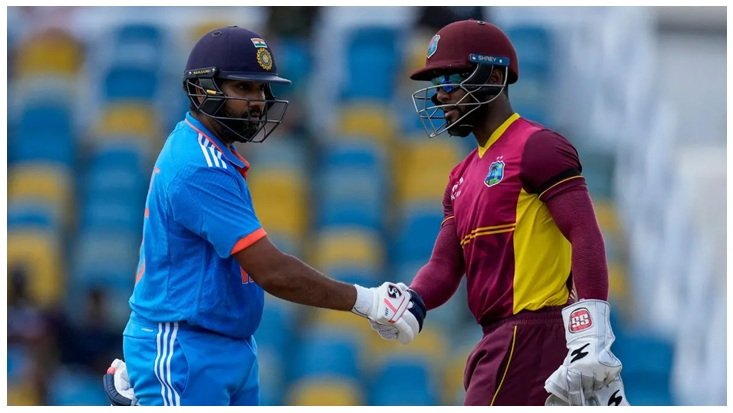
India opened the series with an eight-wicket victory in Lucknow. Captain Shreyas Iyer scored an unbeaten 102 from 43 deliveries, helping the hosts complete their chase comfortably. However, West Indies responded brilliantly in Ranchi, successfully chasing India’s enormous total of 249/5 by scoring 252/4 in 18.3 overs.
India regained the series advantage with a 14-run victory in Indore before West Indies equalised in Hyderabad. Shai Hope scored an unbeaten 102 from 50 deliveries in the fourth encounter, while Keemo Paul collected five wickets to help defend a total of 247/3. With the Bengaluru decider abandoned because of rainfall, both teams shared the series honours.
India vs West Indies ICC T20 World Cup 2026 Scorecard
Another significant encounter between these teams occurred on March 1, 2026, during the ICC Men’s T20 World Cup. The Super Eight fixture at Eden Gardens in Kolkata carried considerable importance because qualification for the semifinals was at stake.
West Indies recorded 195/4 in 20 overs, establishing a demanding target for the Indian batting lineup. India responded with 199/5 in 19.2 overs, securing a five-wicket victory. Sanju Samson played a decisive role by scoring an unbeaten 97 runs from 50 deliveries. His performance helped India overcome the pressure associated with a crucial tournament fixture and secure a place in the semifinals.
Unlike bilateral encounters, World Cup matches involve additional qualification pressure. A single defeat can significantly influence a team’s tournament progress, making individual performances and tactical decisions particularly important.
India vs West Indies Head-to-Head Cricket History
India and West Indies share a cricketing rivalry that stretches across several generations. During the 1970s and 1980s, West Indies established themselves as one of the strongest international cricket teams. Their combination of destructive batting and exceptional fast bowling created significant challenges for opposition teams.
India’s historic victory over West Indies in the 1983 Cricket World Cup final remains a defining moment in international cricket. It demonstrated India’s ability to compete against established cricketing powers and contributed to the sport’s growing popularity throughout the country.
In subsequent decades, India’s international performances improved considerably. The development of talented domestic cricketers, stronger batting combinations and increasingly versatile bowling attacks transformed the team into a formidable opponent. Nevertheless, West Indies have continued to produce talented players capable of changing the direction of matches through individual brilliance.
Understanding the India vs West Indies Cricket Match Scorecard
The india national cricket team vs west indies cricket team match scorecard provides essential information about how a cricket match develops. Unlike a simple scoreboard displaying the current total, a detailed scorecard presents individual contributions, dismissal information, bowling statistics and important match events.
For example, a team total of 249/5 indicates that the batting side scored 249 runs while losing five wickets. However, examining individual contributions helps readers understand whether the innings was built around one outstanding performance or several productive partnerships.
Some important elements of a cricket scorecard include:
-
Individual batting runs, balls faced and strike rates.
-
Bowling overs, wickets, runs conceded and economy rates.
-
Fall of wickets and partnership contributions.
-
Extras, including wides, no-balls, byes and leg-byes.
-
Match results, venue details and individual awards.
Understanding these statistics allows supporters to evaluate performances more accurately rather than relying exclusively on the final result.
India’s Batting Strength Against West Indies
India’s batting depth has become an important advantage in recent encounters against West Indies. Experienced international players combined with younger attacking batters provide flexibility across different match situations.
The 2026 ODI series demonstrated India’s ability to approach substantial targets with confidence. Virat Kohli’s unbeaten century in the opening match and Shubman Gill’s double century in the second ODI highlighted two important qualities: consistency and controlled aggression.
The T20I series also showcased the attacking capabilities of players such as Shreyas Iyer, Sanju Samson, Abhishek Sharma and Ishan Kishan. Their ability to score quickly allows India to establish momentum during the early stages of an innings.
However, aggressive batting also involves risks. Losing several wickets within a short period can disrupt established momentum. Maintaining a balance between attacking intent and responsible shot selection remains essential, particularly against unpredictable bowling conditions.
West Indies Batting Performance Against India
West Indies cricket has traditionally been associated with powerful batting and entertaining stroke play. Modern Caribbean cricketers continue to demonstrate these qualities while adapting to the tactical requirements of international white-ball cricket.
Shai Hope was particularly impressive during the October 2026 T20I series. He accumulated 261 runs across four innings at an average of 130.5, earning the Player of the Series award. His performances demonstrated how consistency and aggressive scoring can complement each other.
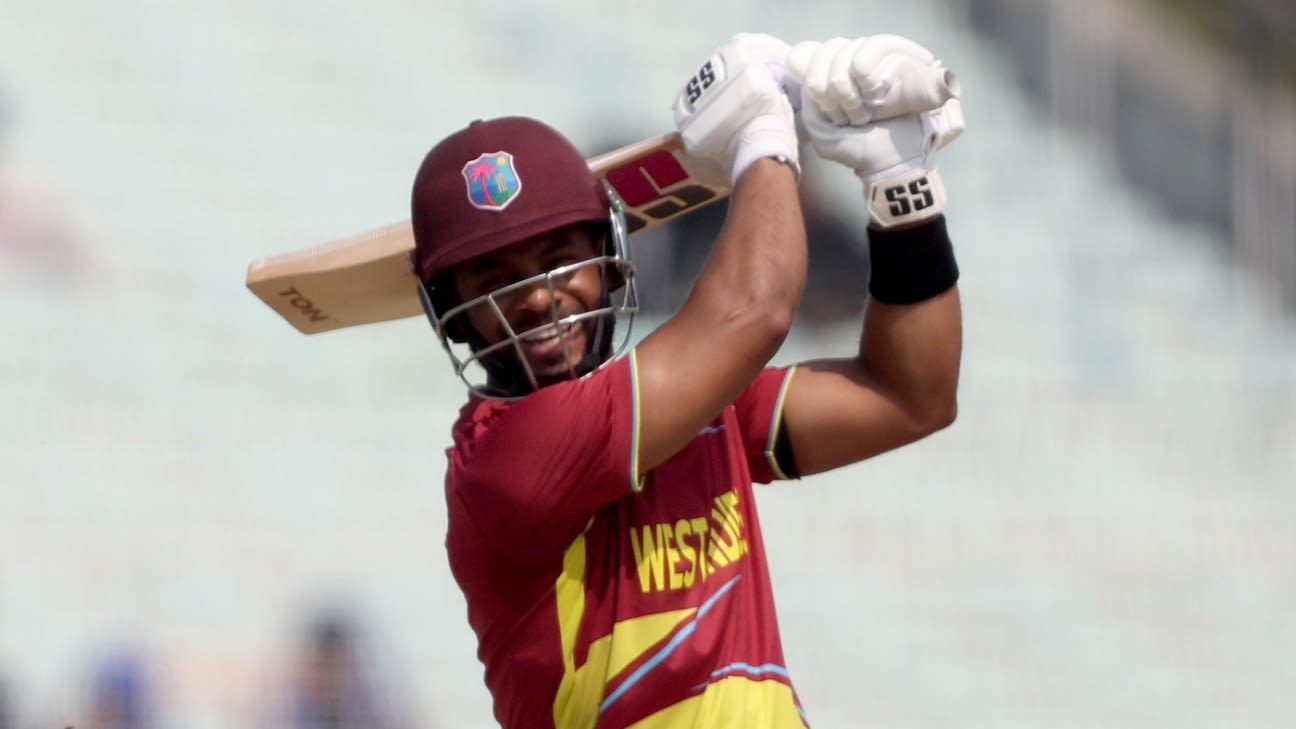
The india national cricket team vs west indies cricket team match scorecard also reveals that West Indies possess the batting resources necessary to challenge substantial Indian totals. Their successful chase of 250 runs in Ranchi highlighted the importance of fearless batting, boundary-hitting ability and maintaining pressure on opposition bowlers.
Bowling Performances and Their Impact on Match Results
Although modern limited-overs cricket frequently celebrates high-scoring batting performances, bowling remains equally important. A well-executed bowling spell can interrupt partnerships, increase the required run rate and completely transform the direction of a match.
During the 2026 T20I series, Keemo Paul collected eight wickets across three matches. His five-wicket performance in Hyderabad demonstrated the value of taking wickets when defending a large total. Even when opposition batters maintain an aggressive scoring rate, regular breakthroughs can prevent them from completing successful run chases.
India’s bowling strategy similarly depends on adapting to opposition strengths. Against powerful Caribbean batters, variations in pace, accurate yorkers, disciplined lengths and intelligent field placements can help reduce boundary-scoring opportunities. Bowlers must also respond quickly when their original plans become ineffective.
How Partnerships Influence India vs West Indies Matches
Batting partnerships play a fundamental role in determining cricket match results. A strong partnership allows teams to recover from early setbacks, maintain scoring momentum and establish a platform for aggressive batting during the later stages of an innings.
India’s successful ODI chases in September 2026 demonstrated the importance of established batters spending considerable time together at the crease. When players communicate effectively and rotate the strike regularly, opposition bowlers find it difficult to maintain consistent pressure.
Partnerships are equally valuable for West Indies. Their aggressive batting approach becomes particularly effective when wickets remain available for the closing overs. Instead of depending entirely on individual six-hitting ability, productive partnerships allow the team to manage risks while maintaining a competitive scoring rate. This combination can make even demanding targets achievable.
Impact of Stadium Conditions on Match Scorecards
Playing conditions significantly influence the performances of both teams. Stadium dimensions, pitch characteristics, weather conditions and outfield speed can affect scoring opportunities and bowling effectiveness.
For example, the high-scoring second T20I in Ranchi demonstrated how quickly totals can increase when batters establish control. Conversely, conditions that offer greater assistance to bowlers may require teams to adopt more patient batting strategies.
Rain also represents an unpredictable factor. The final T20I in Bengaluru during October 2026 provided a clear example of how weather interruptions can prevent a match from producing a result. Even when one team establishes a promising position, insufficient playing time may make a completed contest impossible.
Consequently, readers should consider venue and weather information when comparing scorecards from different matches.
India vs West Indies Cricket Across Different Formats
Test Cricket
Test cricket examines a player’s technical ability, concentration and endurance over an extended period. Batters must demonstrate patience while bowlers need to maintain accuracy across longer spells.
India and West Indies have produced numerous memorable Test encounters throughout their history. While limited-overs cricket rewards rapid scoring, Test matches frequently require disciplined batting, intelligent declarations and effective management of bowling workloads.
One Day International Cricket
ODI cricket combines traditional batting techniques with calculated aggression. Teams have 50 overs to construct competitive totals, making innings management particularly important.
The india national cricket team vs west indies cricket team match scorecard from the 2026 ODI series demonstrated how dramatically scoring expectations have evolved. Both teams exceeded 400 runs during the second ODI, highlighting the growing influence of aggressive batting strategies in the format.
Twenty20 International Cricket
T20 cricket demands quick decision-making, aggressive batting and adaptable bowling. Every delivery carries considerable importance because teams have only 20 overs to establish or chase a target.
West Indies have historically performed well in this format, winning the men’s T20 World Cup in 2012 and 2016. India’s recent international success has similarly demonstrated its ability to compete at the highest level of short-format cricket.
Key Statistics Fans Should Evaluate
Reading the india national cricket team vs west indies cricket team match scorecard becomes more informative when supporters understand the significance of individual statistics. A player’s contribution cannot always be measured by total runs or wickets alone.
For instance, a batter scoring 40 runs from 20 deliveries may provide greater value during a demanding T20 chase than someone scoring 50 from 45 balls. Similarly, a bowler who concedes relatively few runs during a high-scoring match can influence the outcome without collecting numerous wickets.
Required run rates, boundary percentages, dot-ball frequency and partnership durations provide additional context. Evaluating these figures together helps identify the players who genuinely influenced the contest, including those whose performances may receive less attention than headline-making centuries.
Current Scenario of India and West Indies Cricket in 2026
As of November 2026, India and West Indies continue to demonstrate contrasting but increasingly competitive approaches to international cricket. India’s ODI series victory highlighted its batting strength, while the drawn T20I series showed that West Indies remain dangerous opponents in the shortest format.
Following their bilateral encounters, India travelled to New Zealand for an international tour, while West Indies visited Bangladesh for Test cricket. These assignments presented different challenges, requiring players to adjust to unfamiliar conditions and format-specific demands.
The performances witnessed during the 2026 India-West Indies series suggest that future encounters could remain highly competitive. Both teams possess players capable of producing match-winning performances, although bowling consistency, fielding standards and adaptability will continue to influence their results.
Frequently Asked Questions
Who won the latest India vs West Indies match in 2026?
The latest encounter on October 17, 2026, ended without a result because of rainfall in Bengaluru. West Indies won the most recent completed match on October 14 by 24 runs.
Who won the India vs West Indies ODI series in 2026?
India won the three-match ODI series 2–1. India secured victories in the opening two matches before West Indies won the final encounter.
Who was the Player of the Series in the 2026 T20I series?
West Indies captain Shai Hope received the Player of the Series award after scoring 261 runs across four innings.
Who won the India vs West Indies T20 World Cup 2026 match?
India defeated West Indies by five wickets on March 1, 2026. Sanju Samson scored an unbeaten 97 runs to help India successfully complete the chase.
What was India’s highest team score during the 2026 bilateral series?
India’s highest team total during the tour was 406/2, achieved while successfully chasing a target of 406 runs in the second ODI at Guwahati.
Conclusion
The india national cricket team vs west indies cricket team match scorecard reflects a fascinating rivalry shaped by exceptional batting, strategic bowling and unpredictable match situations. The 2026 encounters delivered entertaining performances, remarkable run chases and valuable individual achievements that demonstrated the evolving nature of international cricket.
India’s 2–1 ODI series victory reinforced its batting capabilities, while West Indies’ ability to secure a 2–2 T20I series draw highlighted their competitive character. Players such as Shubman Gill, Virat Kohli, Sanju Samson, Shai Hope and Keemo Paul made significant contributions throughout their respective encounters.
For cricket enthusiasts, examining detailed scorecards provides a deeper understanding of individual performances, team strategies and decisive moments. As both nations continue developing their international squads, this historic rivalry promises to remain an entertaining feature of world cricket.
SEO and editorial notes (not part of the article):
-
Exact primary keyword occurrences: 8.
-
Primary keyword bolding: None.
-
Tables: 1.
-
Bullet-point sections within the article: 1.
-
External URLs within the article: None.
-
Information updated to November 26, 2026.
-
Content written from scratch; an independent plagiarism checker has not been used.
-
The article focuses on men’s international cricket.
Match statistics were researched using official cricket records. The fourth T20I has inconsistent wicket notation across providers; the ICC records India’s innings as 223 all out, while Cricket West Indies lists 223/9. The table uses the latter.
Results+6

