
The cricket rivalry between South Africa and India has produced some of the most exciting encounters in international cricket. Both teams possess talented batters, experienced bowlers, dependable all-rounders and the ability to perform under challenging conditions. Whether it is a Test match, One Day International or T20 International, their encounters attract millions of cricket enthusiasts worldwide. Every match brings new challenges, memorable performances and unexpected turning points that make this rivalry particularly interesting.
The south africa national cricket team vs india national cricket team match scorecard provides a detailed understanding of how both teams perform across different stages of a match. From opening partnerships and middle-order contributions to bowling figures and individual milestones, a scorecard reveals much more than the final result. It allows cricket enthusiasts to examine the strategies, individual performances and important decisions that influence the outcome.
One of their most significant encounters in 2026 occurred during the ICC Men’s T20 World Cup on February 22 at the Narendra Modi Stadium in Ahmedabad. South Africa registered an impressive 76-run victory against India after recovering from a difficult start. The encounter demonstrated the importance of batting partnerships, disciplined bowling and maintaining composure under tournament pressure.
South Africa vs India Match Scorecard 2026: Match Overview
The Super 8 encounter between India and South Africa was an important fixture in the 2026 ICC Men’s T20 World Cup. South Africa won the toss and elected to bat first, allowing their batting lineup to establish a competitive target. Despite losing three early wickets, the Proteas recovered through excellent middle-order batting and finished with 187 runs for seven wickets in 20 overs.
India required 188 runs to win but struggled to build meaningful partnerships against South Africa’s disciplined bowling attack. Regular dismissals prevented the Indian batters from maintaining the required scoring rate. India eventually finished with 111 runs in 18.5 overs, giving South Africa a comprehensive victory.
The following table presents the essential match information and individual performances.
| Match Details | Scorecard Information |
|---|---|
| Match date | February 22, 2026 |
| Tournament | ICC Men’s T20 World Cup 2026 |
| Stage | Super 8, Match 43 |
| Venue | Narendra Modi Stadium, Ahmedabad |
| Match format | T20 International |
| Toss winner | South Africa |
| Toss decision | Bat first |
| South Africa total | 187/7 (20 overs) |
| India total | 111/10 (18.5 overs) |
| Match result | South Africa won by 76 runs |
| Player of the Match | David Miller |
| Highest run scorer | David Miller – 63 runs |
| Best South African bowler | Marco Jansen – 4/22 |
| Best Indian bowler | Jasprit Bumrah – 3/15 |
| India captain | Suryakumar Yadav |
| South Africa captain | Aiden Markram |
South Africa First Innings: Batting Performance and Recovery
South Africa experienced a difficult beginning after choosing to bat first. Aiden Markram scored four runs, Quinton de Kock contributed six, and Ryan Rickelton managed seven before returning to the dressing room. With the team struggling at 20/3, India appeared to have established control through effective new-ball bowling. However, South Africa’s middle order responded by combining calculated aggression with intelligent shot selection.
David Miller and Dewald Brevis added 97 runs for the fourth wicket, changing the direction of the contest. Miller scored 63 runs from 35 deliveries, while Brevis contributed 45 from 29 balls. Tristan Stubbs continued the momentum with an unbeaten 44 from 24 deliveries. Their combined contributions helped South Africa reach a challenging total despite the early setbacks. This recovery highlights why batting depth remains one of the most valuable assets in modern T20 cricket.
India Second Innings: Challenges During the Run Chase
India entered the second innings with a required run rate of 9.40 runs per over. Although the target was achievable for an experienced batting lineup, South Africa’s early breakthroughs made the chase increasingly difficult. Ishan Kishan was dismissed without scoring, while Tilak Varma contributed just one run. Abhishek Sharma scored 15 before losing his wicket, leaving India under considerable pressure during the powerplay.
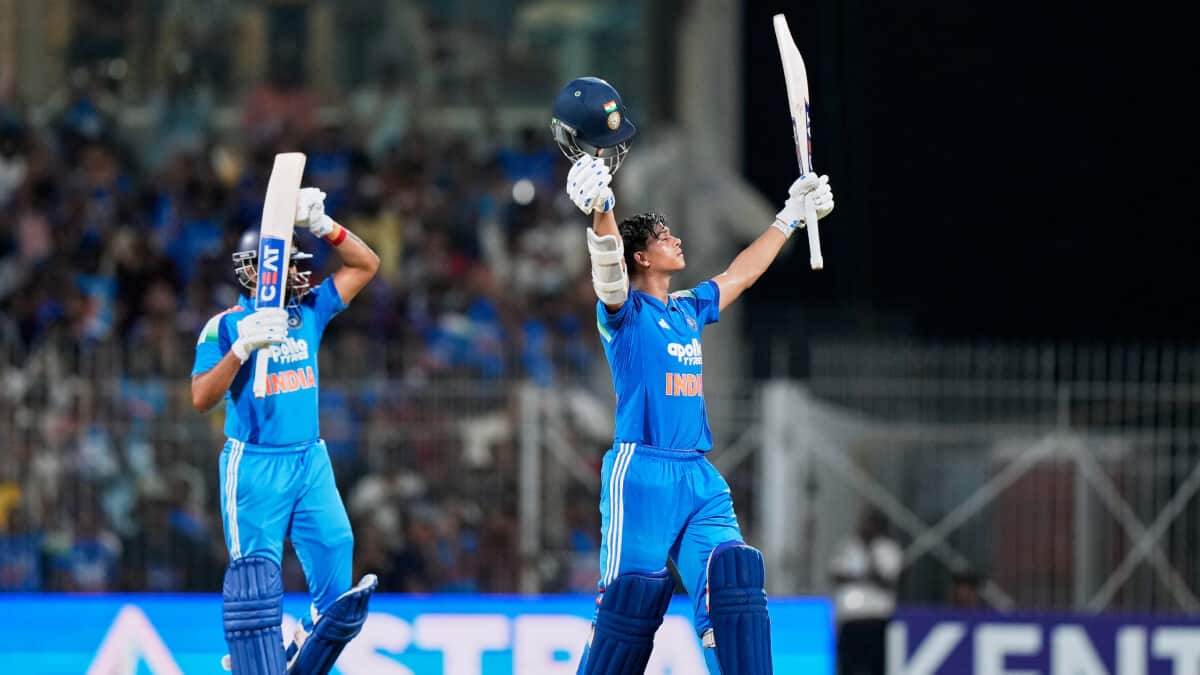
A detailed examination of the south africa national cricket team vs india national cricket team match scorecard shows that India’s middle order could not create a partnership comparable to South Africa’s recovery. Suryakumar Yadav and Hardik Pandya scored 18 runs each, while Washington Sundar contributed 11. Shivam Dube emerged as India’s leading scorer with 42 runs from 37 balls. However, his individual effort was insufficient to overcome the growing required run rate and continuous loss of wickets.
Key Batting Performances in South Africa vs India 2026
David Miller’s Match-Winning Half-Century
David Miller played a decisive role in South Africa’s victory by transforming a vulnerable innings into a competitive batting performance. His 63 runs included seven boundaries and three sixes, producing a strike rate of 180.00. Rather than allowing India’s early success to dictate the remainder of the innings, Miller identified opportunities to score against the available bowling options.
His performance demonstrated the value of experience in pressure situations. A batter who can maintain an attacking mindset without completely sacrificing wicket protection provides considerable flexibility to the team. Miller’s innings allowed the remaining South African batters to approach the closing overs with greater confidence and a stronger platform.
Dewald Brevis and Tristan Stubbs Provide Valuable Support
Dewald Brevis contributed an important 45 runs, including three fours and three sixes. His partnership with Miller helped South Africa move beyond its difficult opening phase. By maintaining a healthy scoring rate, Brevis ensured that the responsibility of rebuilding the innings did not fall entirely on his experienced batting partner.
Tristan Stubbs added further value with his unbeaten 44-run contribution. His ability to score quickly during the closing stages helped South Africa establish a demanding target. These performances demonstrate how contributions from multiple batters can influence a team’s overall success, even when the opening lineup fails to deliver.
Bowling Performance: How South Africa Controlled the Match
South Africa’s bowling attack successfully restricted India’s scoring opportunities throughout the chase. Marco Jansen led the wicket-taking effort, claiming four wickets while conceding only 22 runs. His ability to generate difficult angles and challenge batters made him particularly effective against India’s lineup. Keshav Maharaj also made an important contribution by collecting three wickets for 24 runs.
The south africa national cricket team vs india national cricket team match scorecard also highlights the effectiveness of bowlers who maintained pressure without necessarily taking wickets. Lungi Ngidi conceded just 15 runs across four overs, limiting India’s opportunities to accelerate. Corbin Bosch collected two wickets for 12 runs, while Aiden Markram contributed one wicket. This combination of economical spells and regular breakthroughs prevented India from establishing control during the chase.
India’s Bowling Performance Against South Africa
Despite the eventual defeat, India produced several impressive bowling contributions. Jasprit Bumrah was the standout performer, finishing with three wickets for 15 runs from four overs. His opening spell helped India put South Africa under immediate pressure, while his overall economy demonstrated his ability to restrict an aggressive batting lineup.
Arshdeep Singh supported the bowling attack by claiming two wickets for 28 runs. Varun Chakaravarthy and Shivam Dube collected one wicket each. However, South Africa’s middle-order recovery exposed India’s difficulties in maintaining consistent pressure throughout the innings. The contrast between Bumrah’s economical performance and the runs conceded elsewhere illustrates why collective bowling efficiency is essential in limited-overs cricket.
Major Turning Points That Decided the Match
Every cricket match contains important moments that influence the final result. In this encounter, South Africa’s ability to recover from early dismissals proved particularly significant. India’s failure to establish a strong partnership during the chase created additional opportunities for the opposition to maintain control.
The major turning points included:
-
South Africa recovering from 20/3 through middle-order resistance.
-
David Miller and Dewald Brevis establishing a 97-run partnership.
-
Tristan Stubbs accelerating the scoring during the closing overs.
-
India’s powerplay ending with just 31 runs and three wickets lost.
-
South Africa’s bowlers consistently removing India’s established batters.
These developments demonstrate how a team can overcome an unfavourable start through effective partnerships, tactical awareness and disciplined execution. South Africa performed particularly well during the phases that ultimately determined the outcome.
South Africa vs India Head-to-Head Cricket Rivalry
The rivalry between India and South Africa has developed considerably since South Africa returned to international cricket in 1991. Both teams have experienced periods of success, producing memorable encounters across different formats. Their competitive relationship is particularly interesting because their traditional playing conditions present contrasting challenges.
South African pitches frequently reward pace bowling and extra bounce, while Indian conditions often provide greater opportunities for spin bowling. Nevertheless, both teams have developed versatile squads capable of competing outside their familiar environments. The south africa national cricket team vs india national cricket team match scorecard helps supporters understand how these contrasting strengths influence individual encounters. Recent results also demonstrate that home advantage alone cannot guarantee success against a well-prepared international opponent.
India vs South Africa Test Cricket Performance
Test cricket provides a different perspective on this rivalry because success depends on patience, technical ability, bowling endurance and consistency across several days. Batters must adapt to changing pitch conditions, while bowlers need to create opportunities even when the opposition remains determined to defend.
South Africa delivered a remarkable performance during its November 2025 Test series in India, winning the two-match series 2–0. The Proteas secured a 30-run victory in Kolkata before recording a commanding 408-run win in Guwahati. These results demonstrated South Africa’s ability to compete successfully in Indian conditions and exposed weaknesses in the home team’s approach. For cricket enthusiasts, such encounters provide valuable insight into the importance of adaptability and sustained performance in the longest format.
South Africa vs India ODI Match Scorecard Analysis
One Day International cricket requires teams to balance aggression with innings management. Unlike T20 matches, ODI encounters provide greater opportunities to rebuild after early wickets. However, maintaining a competitive scoring rate remains important, particularly when teams are pursuing substantial targets on batting-friendly surfaces.
India won its December 2025 ODI series against South Africa by a 2–1 margin. India secured the opening encounter by 17 runs before South Africa successfully chased 359 runs in the second match. India responded in the deciding fixture at Visakhapatnam by reaching 271/1 and winning by nine wickets. These results illustrate the unpredictable nature of the rivalry and highlight how different batting approaches can produce successful outcomes across a competitive series.
India vs South Africa T20 International Performance
T20 cricket has added another exciting dimension to the rivalry. With only 120 legal deliveries available to each batting side, players must respond quickly to changing match situations. A productive over, an economical bowling spell or a significant wicket can completely alter the balance of a contest.
India won the December 2025 T20I series against South Africa by a 3–1 margin, with one match abandoned. However, South Africa responded strongly during their February 2026 World Cup encounter. Comparing the south africa national cricket team vs india national cricket team match scorecard across these matches reveals how quickly momentum can change between two competitive teams. Previous victories provide confidence, but they do not eliminate the need for effective preparation and tactical flexibility in subsequent encounters.
The Memorable 2024 T20 World Cup Final
One of the most important encounters between these cricketing nations occurred on June 29, 2024, at Kensington Oval in Barbados. India scored 176/7 in its allotted 20 overs, with Virat Kohli contributing an outstanding 76 runs. South Africa responded with a competitive batting performance but eventually finished at 169/8, allowing India to win the final by seven runs.
The result represented a memorable achievement for Indian cricket, while South Africa demonstrated its ability to compete at the highest level. Their subsequent meeting in the 2026 T20 World Cup produced a contrasting result, with South Africa emerging victorious. Together, these matches reflect the competitive balance between the two nations and demonstrate why their encounters remain highly anticipated among cricket supporters.
Impact of Pitch and Playing Conditions on Match Results
Pitch conditions influence batting strategies, bowling selections and overall match preparation. A surface offering movement with the new ball may encourage captains to introduce their leading fast bowlers early. Alternatively, a dry surface can create opportunities for spinners as the innings progresses.
At Ahmedabad, the February 2026 encounter demonstrated that batters could produce substantial scores after adapting to initial difficulties. South Africa recovered successfully despite losing early wickets, while India struggled to achieve similar momentum. This contrast shows that pitch conditions should be considered alongside batting decisions, bowling execution and the pressure created by the opposition. A scorecard becomes more informative when readers interpret individual performances within the broader context of the match.
How to Understand the South Africa vs India Scorecard
The south africa national cricket team vs india national cricket team match scorecard contains several statistical indicators that help readers evaluate team and individual performances. Understanding these measurements allows cricket enthusiasts to identify important developments that may not be immediately apparent from the final result.
Some essential scorecard indicators include:
-
Runs and balls faced: Measure batting contributions and scoring opportunities.
-
Strike rate: Indicates how quickly a batter scores runs.
-
Economy rate: Measures the average runs conceded per over.
-
Fall of wickets: Identifies when partnerships ended during an innings.
-
Bowling figures: Display wickets collected and runs conceded.
These indicators are particularly useful when comparing players performing different roles. For example, an economical bowler may contribute significantly to a victory without recording multiple wickets. Similarly, a short but aggressive batting performance can be more influential than a longer innings that produces relatively few runs.
The Importance of Partnerships in International Cricket
Successful partnerships allow teams to recover from difficult situations, maintain scoring momentum and reduce the pressure created by individual dismissals. In T20 cricket, effective partnerships are especially valuable because batters have limited deliveries available to rebuild an innings.
South Africa’s recovery during the 2026 encounter demonstrates this principle clearly. Miller and Brevis combined stability with aggressive scoring, allowing their team to regain control after losing three early wickets. India experienced a contrasting situation because established partnerships remained difficult to develop. This difference had a substantial influence on the final result and illustrates why batting performance should be evaluated collectively rather than exclusively through individual scores.
Role of Captaincy and Team Strategy
Captaincy influences numerous aspects of international cricket, including bowling changes, batting-order decisions, field placements and responses to opposition strategies. Effective captains must understand the strengths of their available players while recognising opportunities to apply pressure during important stages of a match.
Aiden Markram’s decision to open the bowling during India’s chase produced an immediate breakthrough. South Africa subsequently maintained control by combining different bowling options. For India, early bowling success created opportunities that could not be sustained throughout the first innings. These contrasting developments demonstrate how tactical decisions must be supported by consistent execution from the entire team.
Why Net Run Rate Matters in World Cup Matches
Net run rate is an important statistical measurement used in many limited-overs tournaments to separate teams finishing with equal points. A substantial victory can strengthen a team’s tournament position, while a heavy defeat may create additional qualification challenges.
South Africa’s 76-run victory in Ahmedabad provided more than two valuable tournament points. The winning margin also benefited its net run rate relative to India. For supporters examining World Cup qualification scenarios, understanding the significance of scoring rates and winning margins provides additional context. A team’s tournament prospects can depend not only on how many matches it wins but also on the effectiveness of its performances.
South Africa vs India Cricket Rivalry: Current Scenario in 2026
As of November 2026, India and South Africa continue to represent competitive forces in international cricket. Their recent encounters demonstrate that neither side can depend entirely on historical achievements or individual reputation. South Africa’s Test series success in India, India’s subsequent white-ball series victories and the Proteas’ World Cup performance illustrate the importance of format-specific preparation.
Following the south africa national cricket team vs india national cricket team match scorecard allows supporters to understand how both teams respond to evolving challenges. With experienced international players and emerging talent contributing to their respective squads, future encounters are likely to provide opportunities for new individual milestones, competitive partnerships and memorable performances. However, results will continue to depend on conditions, squad selection, player availability and match-day execution.
Conclusion
The cricket rivalry between South Africa and India remains one of the most compelling contests in international cricket. Their encounters consistently demonstrate the importance of technical ability, tactical awareness, batting depth and bowling discipline. The February 2026 T20 World Cup match provided a particularly valuable example of how a team can recover from early difficulties and establish control through collective performance.
South Africa’s 187/7 against India’s 111 highlighted the influence of productive partnerships and consistent wicket-taking. David Miller’s half-century, Marco Jansen’s four-wicket performance and Jasprit Bumrah’s economical bowling were among the standout contributions.
Ultimately, the south africa national cricket team vs india national cricket team match scorecard provides more than a record of runs and wickets. It tells the story of a competitive encounter, explains the factors behind victory or defeat and helps cricket enthusiasts appreciate the strategic complexities of international cricket across Tests, ODIs and T20Is.

