
The rivalry between Australia and India is one of the most exciting contests in international cricket. Both teams have a rich cricketing history, world-class players, and passionate supporters who closely follow every match. Whether they compete in Test cricket, One Day Internationals (ODIs), or Twenty20 Internationals (T20Is), their encounters frequently attract attention because of the quality of their batting, the discipline of their bowling attacks, and the pressure associated with high-profile international competition. For fans, the Australian men’s cricket team vs India national cricket team match scorecard offers a convenient way to understand how a match unfolded and which performances made the biggest difference.
A scorecard is more than a record of runs and wickets. It provides a detailed picture of a team’s progress, showing individual contributions, partnerships, bowling efficiency, extras, and the final result. A batter scoring a half-century, a bowler taking crucial wickets, or a lower-order partnership rescuing an innings can completely change a match’s direction. By examining these details alongside the match conditions and turning points, readers can understand why one team gained the advantage and how the other responded.
Because Australia and India play across multiple formats and tournaments, the exact scorecard depends on the particular fixture. Their matches may be part of a bilateral series, the ICC Cricket World Cup, the World Test Championship, or another international competition. Identifying the format, venue, and date is therefore essential when interpreting scores and comparing performances.
Australian Men’s Cricket Team vs India National Cricket Team Match Scorecard Overview
When reviewing the Australian men’s cricket team vs India national cricket team match scorecard, the first details to check are the match date, venue, format, toss decision, and final result. These details establish the context for the numbers that follow. A total of 280 runs in an ODI might be competitive on a challenging pitch but insufficient on a flat surface with short boundaries. Similarly, a score of 175 in a T20I can be strong or below expectations depending on conditions, the quality of the bowling attack, and the state of the game.
In Test cricket, scorecards require a different approach because each team can bat twice, and the result depends on the combined innings, the time remaining, and the number of wickets available. A team scoring 350 in its first innings might still lose if the opposition builds a substantial lead and dominates the remaining sessions. Understanding these differences helps readers interpret the match correctly rather than judging a performance solely by the final total.
Key Match Information to Check
| Scorecard detail | What it tells you |
|---|---|
| Match format | Whether the contest is a Test, ODI, or T20I |
| Venue and date | Where and when the match took place |
| Toss result | Which team chose to bat or bowl first |
| Innings totals | Runs scored and wickets lost by each team |
| Top batting performance | Which players contributed the most runs |
| Bowling figures | Overs, runs conceded, wickets, and economy rate |
| Match result | Winning team, margin, draw, tie, or no result |
This information gives readers a clear starting point before they explore individual batting and bowling performances. It also makes comparisons between different matches more meaningful, particularly when the same two teams meet under different playing conditions.
Australian Batting Performance and Important Contributions
Australia have traditionally been associated with aggressive batting, strong pace bowling, and an ability to maintain pressure throughout a match. However, their batting approach varies according to the format and match situation. In Test cricket, the top order must balance patience with scoring opportunities, especially when facing quality swing bowling or a pitch that offers movement. In ODIs, batters generally build partnerships while preserving wickets for the final overs. In T20Is, power-hitting, strike rotation, and quick starts become particularly important.
When examining Australia’s innings, readers should look beyond the highest individual score. A batter scoring 75 runs from 90 deliveries may have provided stability in an ODI, while a quick 45 from 22 balls could have transformed the final overs. The number of boundaries, strike rate, dismissal method, and partnership contributions help explain the value of each innings. A scorecard can also reveal whether Australia lost several wickets in a short period or recovered through a middle-order partnership. These details help explain why a team finished with a strong total or fell short of its target.
How Australia’s Batting Order Influences the Match
The opening partnership often determines how comfortably Australia can approach the middle overs. If the openers establish a solid foundation, the middle order can accelerate without taking unnecessary risks. If early wickets fall, however, the remaining batters may need to rebuild the innings before launching an attack. This change in approach can influence the scoring rate and the number of wickets available at the end.
In a close contest, contributions from players lower down the order can be equally valuable. A batter who adds 25 important runs after the seventh wicket may help Australia reach a competitive total, particularly on a difficult surface. The scorecard records these contributions, but understanding the match situation explains why they mattered. Readers should therefore consider both individual statistics and the circumstances in which the runs were scored.
India’s Batting Performance and Run-Scoring Strategy
India’s batting strength has often come from a combination of technically accomplished top-order players, versatile middle-order batters, and attacking finishers. Depending on the selected squad and format, the team can adapt its approach to different conditions. Against Australia’s fast bowlers, Indian batters may need to negotiate short-pitched deliveries, control the off-stump line, and avoid losing wickets during the opening phase. Once they settle at the crease, they can use placement, running between the wickets, and boundary hitting to build momentum.
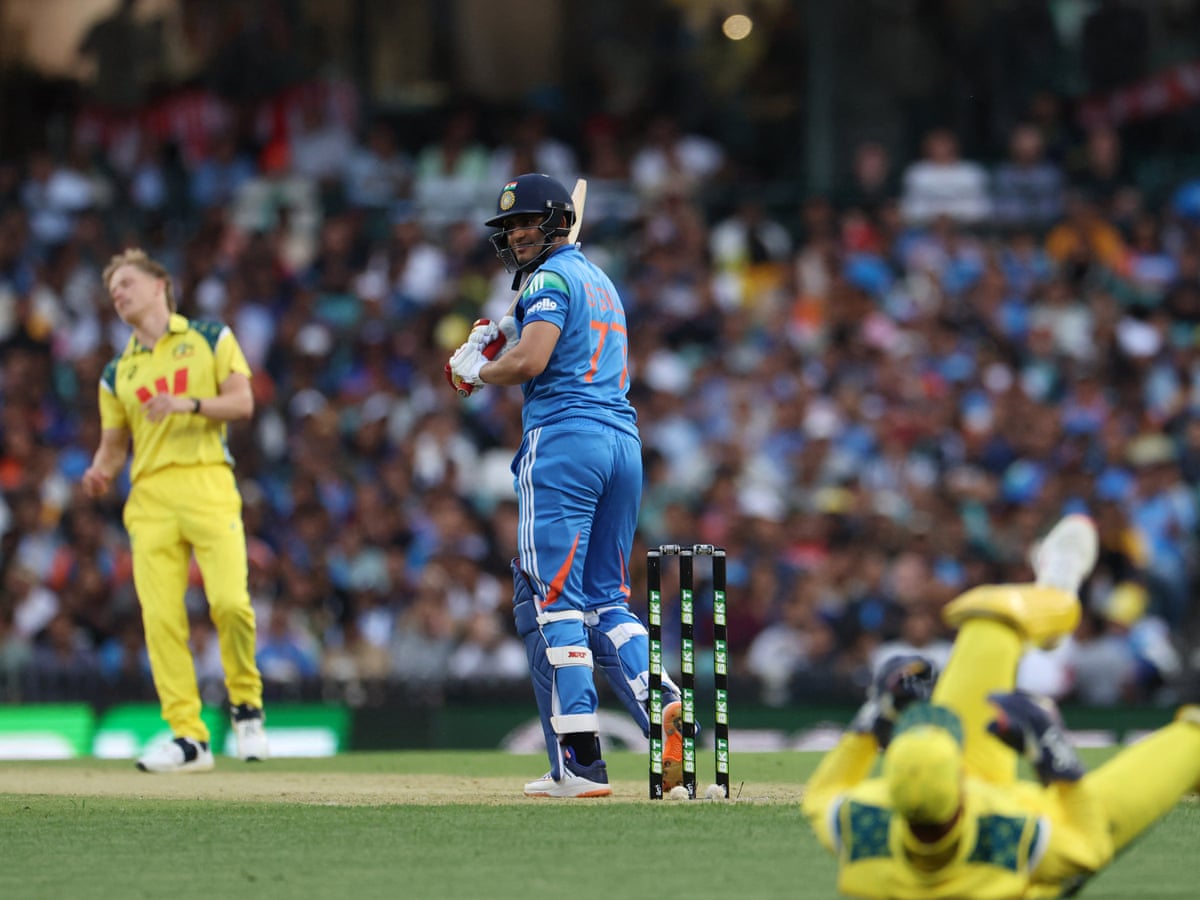
The Australian men’s cricket team vs India national cricket team match scorecard is especially useful for assessing India’s response when chasing a target. A successful chase usually depends on maintaining a suitable run rate while keeping enough wickets in hand. For example, a team requiring eight runs per over with seven wickets remaining has more flexibility than a team needing the same rate with only three wickets left. The scorecard shows the runs, balls faced, and wickets lost, helping readers understand whether India controlled the chase or had to rely on a late recovery.
Partnerships and Middle-Order Stability
Partnerships are among the most important elements of a cricket innings. Two batters who add 90 runs together can change the momentum of a game even if neither reaches a century. Their contribution reduces the pressure on the lower order and allows the team to manage scoring opportunities more carefully. In ODIs, partnerships often determine whether a team reaches a competitive total, while in T20Is, a short but explosive stand can shift the balance within a few overs.
India’s middle order also plays a crucial role when early wickets fall. Experienced batters may focus on rebuilding the innings, while aggressive players can target particular bowlers once the situation becomes more stable. Reading the scorecard alongside the fall of wickets helps explain these tactical choices. It shows whether the team recovered after an early setback or continued to lose wickets at important moments.
Bowling Analysis: Australia vs India
Batting totals tell only part of the story because bowling performances often determine whether a team can defend its score. Australia and India have both fielded accomplished fast bowlers and spin options capable of changing a match through crucial spells. Australia’s pace attack may look to exploit bounce, seam movement, and variations in length, while India’s bowling strategy can combine pace, swing, and spin depending on the conditions. The effectiveness of these approaches becomes clearer when readers examine wickets, runs conceded, overs bowled, and the timing of important breakthroughs.
A bowler taking three wickets is not automatically the most economical or influential performer. One bowler might take two wickets while conceding very few runs, putting pressure on the opposition throughout the innings. Another might take three wickets during an expensive spell but dismiss dangerous batters at decisive moments. The Australian men’s cricket team vs India national cricket team match scorecard helps readers compare these performances by showing both wicket-taking ability and run control. In limited-overs cricket, the economy rate and death-over figures are especially useful, while Test matches require attention to consistency, workload, and the ability to create repeated wicket-taking opportunities.
The Importance of Spin and Pace
Fast bowlers can be particularly influential during the opening overs, when the ball is new and conditions may favour swing or seam movement. Their performance can shape the opposition’s scoring approach and force batters to take risks earlier than planned. At the other end of an innings, slower balls, yorkers, and well-directed short deliveries can prevent batters from scoring freely.
Spin bowling offers another tactical dimension. On surfaces that provide turn or grip, spinners can challenge batters with changes in pace, flight, and angle. Their contribution may be measured not only by wickets but also by their ability to restrict scoring and create pressure that leads to mistakes. When studying the figures, consider how each bowling style matched the pitch, the batters at the crease, and the match situation.
Fielding, Extras, and Turning Points
Fielding is another important aspect of the match that can be overlooked when readers focus exclusively on batting and bowling. A direct-hit run-out, a difficult boundary catch, or a missed opportunity can influence the outcome of a close contest. Although fielding contributions do not always appear as prominently as runs and wickets, dismissals, catches, and run-outs recorded on a scorecard can reveal important moments. A dropped catch may allow a batter to continue scoring, while an outstanding catch can remove a well-set player and shift the momentum.

Extras also deserve attention. Wides, no-balls, byes, and leg-byes contribute to the team total without being credited as runs to an individual batter. In limited-overs cricket, several unnecessary extras can make a meaningful difference, particularly when the final margin is narrow. Readers studying the Australian men’s cricket team vs India national cricket team match scorecard should therefore consider whether either side gave away avoidable runs or lost valuable opportunities through fielding mistakes.
Some of the most important turning points to identify in a match include:
-
An early wicket that disrupts the batting team’s planned strategy.
-
A substantial partnership that stabilises or accelerates the innings.
-
A bowling spell that removes key batters in quick succession.
-
A late scoring surge or disciplined final overs that changes the result.
These moments provide context for the final numbers and help explain why the contest developed in a particular direction.
How Match Results Differ Across Formats
The format of a match has a major influence on how its scorecard should be interpreted. Test cricket rewards endurance, tactical adjustments, and consistency across several days. Teams must manage changing pitch conditions, bowling workloads, and the risk of losing wickets while trying to build a lead. A draw can be a meaningful result when a team successfully defends its position, while a victory by an innings indicates a substantial advantage across the match.
ODIs require a balance between stability and acceleration. Batters generally need to build partnerships before increasing the scoring rate, while bowlers must manage different phases of the innings. T20Is are shorter and more intense, making every over especially significant. A strong powerplay, a successful middle-over spell, or a productive final partnership can quickly change the outcome. For this reason, identical totals should not be judged in the same way across all three formats.
The Australian men’s cricket team vs India national cricket team match scorecard should always be read with these format-specific expectations in mind. A total that represents a strong performance in a low-scoring Test match may be inadequate in a high-scoring T20I. Similarly, a modest individual score can be valuable if it supports a successful chase or helps a team recover after early wickets.
Where to Find Accurate Match Information
For readers following current international cricket, accuracy begins with identifying the correct fixture. Australia and India participate in several competitions, and men’s senior international matches should not be confused with India A versus Australia A games or domestic competitions. The date, format, venue, and participating squads help establish whether a scorecard relates to the intended match.
Before drawing conclusions, check the final innings totals, the number of overs completed, the winning margin, and whether weather or a revised target affected the result. For an ongoing match, remember that the score can change with every delivery. A live scorecard is provisional until play concludes, and a match abandoned because of weather may not have a conventional winner.
Readers should also distinguish between a match summary and a complete scorecard. A summary generally provides the final score and result, whereas a detailed scorecard includes individual batting figures, bowling statistics, fall of wickets, extras, and other match information. Using the full record makes it easier to compare performances and understand the reasons behind the result.
Conclusion
The Australia–India cricket rivalry continues to attract attention because it brings together competitive teams, skilled players, contrasting tactics, and memorable international contests. Understanding a match requires more than checking which side won. Batting partnerships, bowling efficiency, fielding standards, extras, and crucial moments all contribute to the final outcome.
The Australian men’s cricket team vs India national cricket team match scorecard provides a structured way to evaluate these factors. By examining the innings totals, individual contributions, bowling figures, and match conditions, readers can develop a clearer understanding of each team’s performance. Whether following a Test, ODI, or T20I, the most useful approach is to combine the numerical record with the context in which the game was played.
For the most accurate analysis, always identify the specific fixture before interpreting the figures. Doing so helps distinguish one encounter from another and ensures that comparisons reflect the correct format, venue, and result. A carefully read scorecard ultimately offers a deeper appreciation of the strategy, skill, and pressure that make Australia versus India one of cricket’s most compelling matchups.

