
The Indian Premier League is one of cricket’s most competitive T20 tournaments, where every match can influence a team’s position and its chances of reaching the playoffs. Fans follow the tournament not only to watch exciting batting performances, impressive bowling spells and close finishes but also to understand which teams are moving closer to the championship. The points table brings all this information together, offering a clear picture of each team’s performance throughout the competition.
The IPL standings are particularly important because winning matches is only one part of a successful campaign. Teams must also maintain consistency, manage their net run rate and collect enough points to remain competitive against other franchises. A team that starts slowly can still recover through a winning streak, while a side that performs well early in the season may face pressure after consecutive defeats. These changing situations make the league table an essential part of following the tournament.
For the 2026 season, readers should distinguish between the confirmed final standings and a live table that changes as matches are completed. The latest position of every franchise depends on the results recorded at the relevant point in the competition. Understanding how the table works, how ties are resolved and what teams need to qualify for the playoffs makes it easier to interpret the tournament beyond individual match scores.
IPL Standings 2026: Final Points Table and Team Rankings
The 2026 league stage has concluded, and the final table shows how the ten franchises performed across their campaigns. Royal Challengers Bengaluru finished first with 18 points and a net run rate of +0.783. Gujarat Titans and Sunrisers Hyderabad also collected 18 points, but their lower net run rates placed them second and third, respectively. Rajasthan Royals secured fourth place with 16 points, completing the playoff lineup. These results demonstrate how small differences in overall performance can determine a team’s position when several franchises finish with the same number of points.
The final IPL standings also reveal how competitive the middle of the table remained. Punjab Kings finished fifth with 15 points, followed by Delhi Capitals with 14. Kolkata Knight Riders collected 13 points, while Chennai Super Kings ended their campaign with 12. Mumbai Indians and Lucknow Super Giants finished ninth and tenth, respectively, with eight points apiece. Although teams at the top enjoyed stronger campaigns overall, the figures also show why individual victories, rain-affected matches and net run rate can have a substantial effect on a season’s final outcome.
| Position | Team | Played | Won | Lost | Points | NRR |
|---|---|---|---|---|---|---|
| 1 | Royal Challengers Bengaluru | 14 | 9 | 5 | 18 | +0.783 |
| 2 | Gujarat Titans | 14 | 9 | 5 | 18 | +0.695 |
| 3 | Sunrisers Hyderabad | 14 | 9 | 5 | 18 | +0.524 |
| 4 | Rajasthan Royals | 14 | 8 | 6 | 16 | +0.189 |
| 5 | Punjab Kings | 14 | 7 | 6 | 15* | +0.309 |
| 6 | Delhi Capitals | 14 | 7 | 7 | 14 | -0.651 |
| 7 | Kolkata Knight Riders | 14 | 6 | 7 | 13* | -0.147 |
| 8 | Chennai Super Kings | 14 | 6 | 8 | 12 | -0.345 |
| 9 | Mumbai Indians | 14 | 4 | 10 | 8 | -0.584 |
| 10 | Lucknow Super Giants | 14 | 4 | 10 | 8 | -0.740 |
*Punjab Kings and Kolkata Knight Riders each had one match with no result. Their points reflect seven wins or six wins, respectively, plus one point for the abandoned match.
How the IPL Points System Works
The league table follows a straightforward points system that rewards victories and helps teams measure their progress throughout the competition. A team receives two points for a win, no points for a defeat and one point when a match ends without a result. These rules apply regardless of whether a team wins by a large margin or in the final over. Consequently, a narrow victory and a dominant win provide the same points, although the size of the victory can influence net run rate.
A typical league campaign consists of 14 matches for each franchise. A team that wins nine matches and loses five finishes with 18 points, provided there are no abandoned matches. Another team could also reach 18 points through a different combination of wins and no-result games. When two or more franchises finish level on points, additional performance measures determine their positions. This is why understanding the standings requires more than counting victories. Supporters should also examine matches played, results, net run rate and the number of points separating neighbouring teams.
What the Main Table Columns Mean
The table uses several abbreviations to summarise each franchise’s performance. Once readers understand these terms, comparing teams becomes much easier, especially near the end of the league stage when qualification scenarios become complicated.
-
P (Played): The number of league matches completed by a team.
-
W and L: The total number of matches won and lost.
-
NR (No Result): Matches that ended without an official result, often because of weather.
-
Pts (Points): The total points collected through wins and no-result matches.
-
NRR (Net Run Rate): A measure of scoring performance compared with the opposition.
These figures work together to explain why a team occupies a particular position. A franchise with fewer defeats may still rank below another if both teams have equal points and the second team has a superior net run rate. Looking at the full table therefore provides a more reliable picture than judging a campaign from recent match results alone.
Why Net Run Rate Is Important in IPL Standings
Net run rate, commonly abbreviated as NRR, is one of the most influential statistics in the league stage. It measures the difference between a team’s average scoring rate and the average rate at which its opponents score against it. When teams finish with the same number of points, net run rate can decide which franchise receives the higher position. The 2026 table provides a clear example: Royal Challengers Bengaluru, Gujarat Titans and Sunrisers Hyderabad all finished with 18 points, but RCB secured first place because its net run rate was the strongest among the three.
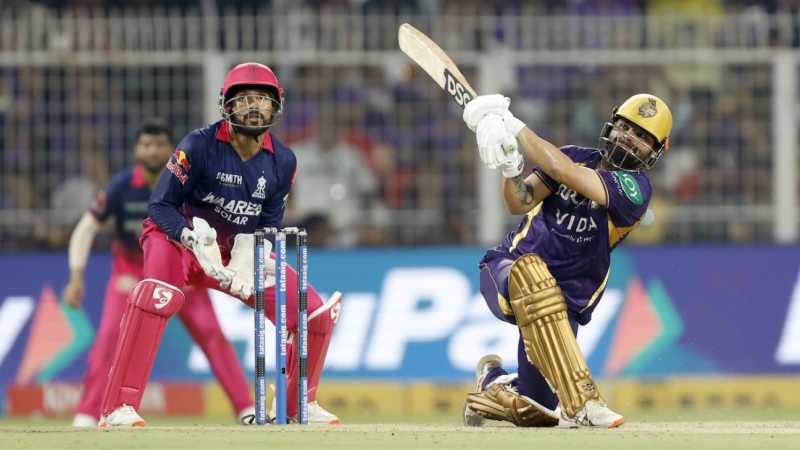
Net run rate can improve when a team scores quickly and restricts its opponent to a lower total. For instance, winning a match comfortably while chasing a target with plenty of overs remaining can help a franchise improve its overall figure. Similarly, bowling an opponent out for a low total and then reaching the target efficiently may produce a favourable result. However, one match does not determine the entire calculation; NRR reflects the relevant scoring and overs figures across the team’s league matches. A strong net run rate can prove decisive when a season’s competition is closely contested.
How Teams Can Improve Their Net Run Rate
Teams generally benefit from combining effective batting with disciplined bowling. A powerful batting lineup can build a substantial total, while economical bowling and regular wickets can limit the opposition’s scoring opportunities. Chasing teams also need to balance caution with the urgency required to finish quickly. Taking unnecessary risks may lead to a collapse, but an excessively slow chase can reduce the benefit of a successful result.
The key lesson is that a team should aim to win matches convincingly whenever circumstances allow. A narrow victory still earns two points, but a larger margin may strengthen the team’s position in a tie. This is particularly relevant during the final weeks of the league stage, when several franchises may have similar records. Following the IPL standings alongside NRR helps supporters understand why the manner of a victory can matter almost as much as the result itself.
Which Teams Qualified for the IPL 2026 Playoffs?
The top four franchises at the end of the league stage qualified for the playoffs in 2026. Royal Challengers Bengaluru, Gujarat Titans, Sunrisers Hyderabad and Rajasthan Royals earned those places after completing their 14 league matches. Their qualification reflected a combination of consistent results, successful match preparation and the ability to collect enough points across the season. Finishing among the top four is an important achievement, but it does not automatically guarantee a place in the final.
The playoff format gives the leading teams different routes towards the championship. The first- and second-placed teams meet in Qualifier 1, with the winner advancing directly to the final. The third- and fourth-placed teams compete in the Eliminator, where the losing side is eliminated. The Eliminator winner then faces the loser of Qualifier 1 in Qualifier 2, and the winner of that match advances to the final. This format rewards strong league-stage performance by giving the top two teams an additional opportunity to reach the championship match.
What Happened to Teams Outside the Top Four?
Punjab Kings came close to qualifying but finished fifth with 15 points, despite recording a positive net run rate of +0.309. Delhi Capitals finished sixth with 14 points, while Kolkata Knight Riders occupied seventh place with 13. Chennai Super Kings ended eighth on 12 points. Mumbai Indians and Lucknow Super Giants each collected eight points, placing them ninth and tenth, respectively.
These results illustrate the importance of consistency throughout a long tournament. A promising run of victories may help a franchise climb the table, but dropped points earlier in the campaign can prove costly. Teams also need to take advantage of favourable match situations rather than relying on other franchises to lose. For supporters, the final rankings offer a useful way to evaluate each team’s campaign beyond individual player performances or memorable wins.
Factors That Influence Team Rankings During the Season
The position of a franchise can change considerably as the competition progresses. Winning consecutive matches helps teams accumulate points and creates momentum, while repeated defeats can push them towards the lower half of the table. The strength of the batting order, the availability of experienced bowlers, fielding standards and tactical decisions all influence match outcomes. Even a team with several talented players may struggle if it cannot deliver consistent performances under pressure.
Weather interruptions and abandoned matches can also affect the competition. A no-result match usually awards one point to each team, which may leave a franchise with fewer points than a rival that completes its schedule successfully. Fixture timing, player availability and the ability to adapt to different pitches also contribute to the overall challenge. These factors explain why supporters should consider the full season rather than relying on the last two or three results when assessing a team’s prospects.
Another important consideration is the difference between a team’s current position and its final position. During the league stage, a franchise with matches remaining may have opportunities to gain points and improve its ranking. Once all league matches are completed, however, the table becomes final, and teams can no longer change their league-stage records. Keeping this distinction in mind prevents confusion when reading older match reports or comparing live updates with final season statistics.
How to Read and Compare IPL Team Performance
Following the table is more useful when readers compare several indicators rather than focusing exclusively on rank. Points show how much a team has achieved in terms of results, wins reveal how frequently it has succeeded, and NRR offers additional insight into the margins of its performances. Recent form can provide context, but it should not replace the complete record. A team may have won its last three matches yet still sit below a rival that collected more points over the full season.
For a practical comparison, consider two hypothetical teams with the same number of matches played. Team A has eight victories, while Team B has seven wins and one no-result match. Both could finish with 16 points. If Team B has a stronger net run rate, it may rank above Team A despite recording fewer victories. This example shows why the points total, match results and NRR should be considered together when interpreting a close contest.
Readers who follow the IPL standings can also use the table to understand the difference between a strong individual performance and overall team success. A batter may score heavily or a bowler may take several wickets, but those achievements matter most to the league campaign when they contribute to winning matches. Cricket remains a team sport, and successful franchises usually combine individual talent with effective partnerships, tactical flexibility and consistent execution.
Conclusion
The IPL league table provides a clear overview of the competition, showing which teams have performed consistently, which franchises have secured playoff qualification and which sides have struggled to collect points. The final 2026 rankings placed Royal Challengers Bengaluru first, followed by Gujarat Titans, Sunrisers Hyderabad and Rajasthan Royals. Their positions highlight the value of winning matches regularly and maintaining a strong net run rate when teams finish level on points.
Understanding the IPL standings makes following the tournament more engaging because every statistic contributes to the larger story of the season. Points explain a team’s results, net run rate helps separate teams with equal totals, and playoff positions show which franchises remain in contention for the championship. By examining these details together, cricket fans can better appreciate the strategies, pressure and consistency required to succeed in the Indian Premier League.

.webp&description=Explore IPL standings, team rankings, points table rules, net run rate, match results and playoff qualification scenarios to understand the race for the championship.)