
The rivalry between the India national cricket team and the South Africa national cricket team is one of the most competitive matchups in international cricket. Whenever these two teams meet, fans expect a contest featuring technically strong batting, fast bowling, intelligent spin, and moments that can change the direction of a match within a few overs. Both teams have produced memorable performances across Test matches, One Day Internationals (ODIs), and Twenty20 Internationals (T20Is), making their encounters interesting for cricket enthusiasts around the world.
For supporters who want to understand the complete picture of a game, the india national cricket team vs south africa national cricket team match scorecard provides a useful starting point. It helps readers examine team totals, individual batting contributions, wickets, bowling figures, extras, and the final result. However, a scorecard becomes even more valuable when its numbers are considered alongside the match conditions, partnerships, bowling changes, and important turning points that shaped the contest.
Since the two teams meet in different formats and across multiple series, there is no single scorecard that represents every India-South Africa match. The date, tournament, venue, and format determine which scorecard is relevant. Understanding these details is essential for readers looking for a particular result rather than a general overview of this historic rivalry.
India vs South Africa Match Scorecard: Latest Major Encounter
One of the most significant recent meetings between the senior men’s teams took place on 22 February 2026 during the ICC Men’s T20 World Cup. South Africa defeated India by 76 runs in a Super Eight match at the Narendra Modi Stadium in Ahmedabad. South Africa posted 187/7 in 20 overs, while India were dismissed for 111 in 18.5 overs. The result highlighted South Africa’s ability to combine powerful middle-order batting with disciplined, wicket-taking bowling.
The india national cricket team vs south africa national cricket team match scorecard from this encounter demonstrates how a competitive first-innings total can become a challenging target when the chasing side loses wickets early. South Africa built a strong platform through their middle-order batters, and their bowlers maintained pressure throughout India’s innings. Rather than allowing the chase to develop into a close contest, South Africa repeatedly interrupted India’s progress with crucial breakthroughs.
Match Summary
| Match detail | Information |
|---|---|
| Tournament | ICC Men’s T20 World Cup 2026 |
| Match stage | Super Eight |
| Date | 22 February 2026 |
| Venue | Narendra Modi Stadium, Ahmedabad |
| South Africa | 187/7 in 20 overs |
| India | 111 all out in 18.5 overs |
| Result | South Africa won by 76 runs |
South Africa Batting Performance
South Africa’s total of 187/7 gave the team a competitive platform in a high-pressure World Cup match. David Miller was one of the standout performers, scoring 63 runs from 35 balls, while Tristan Stubbs contributed an unbeaten 44 from 24 deliveries. Dewald Brevis added a valuable 45 from 29 balls, helping South Africa recover from the early stages and maintain a strong scoring rate. These innings were particularly important because they ensured that the team did not rely on a single batter to carry the entire innings.
Miller’s contribution showed the value of experience in T20 cricket. A middle-order batter must often balance the need to preserve wickets with the urgency of increasing the scoring rate. By finding boundaries and rotating the strike, Miller kept the innings moving, while Stubbs provided additional momentum towards the end. Brevis also played a significant role in building the total. Together, these performances gave South Africa enough runs to put India’s batting lineup under considerable pressure during the chase.
South Africa’s Key Batting Contributions
The major contributions in the innings were spread across three important performers:
-
David Miller: 63 runs off 35 balls, including seven fours and three sixes.
-
Dewald Brevis: 45 runs off 29 balls, with three fours and three sixes.
-
Tristan Stubbs: An unbeaten 44 off 24 balls, including three sixes.
These figures illustrate why a T20 innings cannot be evaluated by total runs alone. Strike rate, boundary frequency, partnerships, and the timing of each contribution all influence the final score.
India Bowling Scorecard and Performance Analysis
India’s bowling attack had the difficult task of restricting South Africa on a surface where batters who settled in could score quickly. Jasprit Bumrah was particularly effective, taking three wickets for 15 runs in his four overs. Arshdeep Singh also made an impact with two wickets, while Varun Chakaravarthy claimed one. These performances helped India take wickets, but South Africa’s middle-order contributions ensured that the bowling side could not keep the total as low as it might have hoped.
Bumrah’s economical spell was an important positive for India. In T20 cricket, bowlers who can limit scoring while creating opportunities for dismissals provide their teams with a major advantage. However, controlling one part of an innings is not always enough when the opposition has several batters capable of accelerating. India’s challenge was to limit the scoring across all 20 overs, and South Africa’s late-innings contributions helped them reach a strong total despite losing seven wickets.
India Batting Scorecard and Run Chase
India entered the chase needing 188 runs to win, which required a scoring rate of 9.40 runs per over from the beginning. That target was achievable in T20 cricket, but it demanded a productive powerplay and meaningful partnerships through the middle overs. Instead, India lost wickets regularly and struggled to establish the platform needed for a sustained chase. The team was eventually dismissed for 111 in 18.5 overs, leaving South Africa with a comprehensive victory.
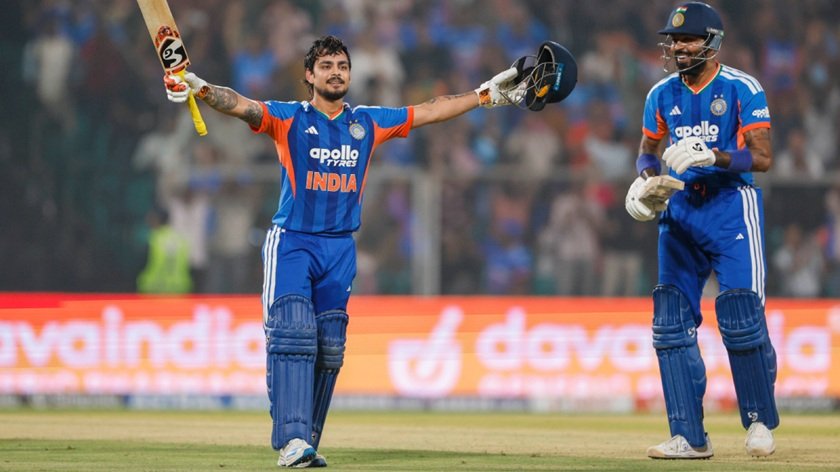
Shivam Dube was India’s leading scorer in the published scorecard, making 42 runs from 37 balls. Suryakumar Yadav contributed 18, while Hardik Pandya scored 18 and Abhishek Sharma added 15. Although these contributions helped India move beyond the early collapse, the team did not receive the sustained acceleration required to challenge the target. The innings also illustrated how the pressure of a rising required run rate can affect shot selection and decision-making.
India’s Important Batting Contributions
India’s innings included several individual efforts, but no batter was able to turn a start into a match-defining performance. Dube’s innings was the most substantial, although the number of deliveries he faced meant that the chase did not progress quickly enough. The middle order faced a difficult balance: rebuild after early wickets while still attempting to maintain the scoring rate required to win.
When reading the india national cricket team vs south africa national cricket team match scorecard, this distinction matters. A batter can make a respectable number of runs without necessarily helping the team maintain its required scoring rate. In a successful chase, individual contributions usually work together, with one batter anchoring the innings while others take calculated risks and attack suitable deliveries.
South Africa Bowling: The Decisive Factor
South Africa’s bowling performance was central to the result. Marco Jansen took four wickets for 22 runs, while Keshav Maharaj claimed three wickets for 24 runs. Corbin Bosch added two wickets for 12 runs, giving South Africa several effective options rather than forcing the captain to depend on one bowler. The combination of pace and spin helped South Africa maintain control as India’s batting order attempted to recover.
Jansen’s spell was particularly influential because his wickets repeatedly interrupted India’s momentum. Maharaj’s contribution added further pressure, while Bosch provided another source of breakthroughs. The attack demonstrated an important principle of limited-overs cricket: taking wickets can be just as important as restricting runs. When a batting side loses several players early, the remaining batters are often forced to take greater risks, creating further opportunities for the bowling team.
How South Africa Controlled the Chase
South Africa’s approach combined wicket-taking deliveries with pressure on India’s scoring rate. Rather than allowing the Indian batters to settle into long partnerships, the bowlers kept creating situations in which new batters had to adjust quickly. This is especially important in a T20 chase, where a new batter may need to attack almost immediately instead of spending several overs building an innings.
The difference between the two teams was visible in the overall progression of the match. South Africa’s batters established a substantial total, and their bowlers ensured India never developed a sustained response. The result was not simply a matter of the target being too high; it also reflected South Africa’s ability to execute its plans under pressure.
Major Turning Points in the Match
The first important turning point was South Africa’s middle-order acceleration. Miller, Brevis, and Stubbs contributed heavily to the final total, ensuring that the innings retained momentum even as wickets fell. Their performances created a challenging target that required India to maintain a high scoring rate throughout the chase.
The second turning point was India’s loss of early wickets. A team pursuing 188 needs to avoid a prolonged period in which runs are difficult to score and wickets are falling. Once India lost several batters, the middle order had less freedom to build partnerships. South Africa capitalised on this situation, and the required run rate became increasingly difficult to manage.
The final turning point was the effectiveness of South Africa’s bowling combination. Jansen’s four wickets and Maharaj’s three wickets dismantled the batting order, while Bosch provided further support. These performances prevented India from producing a late recovery and confirmed South Africa’s 76-run victory.
How to Read a Cricket Match Scorecard Correctly
A cricket scorecard is more than a record of runs and wickets. It offers a compact explanation of how each team performed, which batters contributed most effectively, and how the bowlers influenced the result. For readers checking the india national cricket team vs south africa national cricket team match scorecard, understanding the abbreviations and statistics makes it easier to identify the most important performances without following every ball of the match.
The batting section usually includes runs scored, balls faced, boundaries, sixes, and strike rate. The bowling section records overs, maiden overs, runs conceded, wickets, and economy rate. Additional information, such as extras, fall of wickets, and partnerships, helps readers understand why an innings progressed in a particular way. For example, a batter scoring 30 runs from 15 balls has a different impact in a T20 match from one scoring 30 from 40 balls. Both contributions count equally towards the team’s total, but their influence on the scoring rate differs considerably.
Important Scorecard Terms
-
Strike rate: The number of runs scored per 100 balls faced by a batter.
-
Economy rate: The average number of runs conceded per over by a bowler.
-
Fall of wickets: The team score and over at which each wicket was lost.
-
Extras: Runs awarded through wides, no-balls, byes, and leg-byes, among other applicable categories.
These details help readers move beyond the final result and understand how a match was won or lost.
India vs South Africa in Different Cricket Formats
India and South Africa approach cricket differently depending on the format. Test matches reward patience, technical discipline, and the ability to maintain concentration across several sessions. Batters must manage changing pitch conditions, while bowlers need to create pressure through sustained spells. A Test scorecard therefore includes multiple innings for each team, and the final result may depend on declarations, follow-on decisions, and the time remaining in the match.
ODI cricket places greater emphasis on balancing stability with acceleration over 50 overs. Teams must manage wickets carefully during the middle overs while preparing for a strong finish. The 2025 ODI series in India illustrated how varied these contests can be: India won the first ODI in Ranchi by 17 runs, South Africa won the second in Raipur by four wickets, and India claimed the third in Visakhapatnam by nine wickets.
T20 cricket is more compressed and places a premium on rapid scoring, adaptable bowling plans, and decisive contributions from the middle order. A brief collapse can change the outcome within minutes, while a single powerful partnership can transform a modest total into a challenging one. The February 2026 World Cup encounter is a clear example: South Africa combined middle-order runs with an effective bowling performance to defeat India by 76 runs.
Why Fans Search for India vs South Africa Scorecards
Cricket fans search for scorecards for several reasons. Some want to confirm the final score and winning margin, while others are interested in an individual player’s performance or the bowling figures that decided the contest. Scorecards are also useful for comparing players across matches, reviewing team performance, and understanding the difference between a close contest and a one-sided result.
For students of the game, analysts, and fantasy cricket enthusiasts, scorecards provide a useful starting point for evaluating consistency. However, the numbers should always be interpreted in context. A batter’s contribution depends on the match situation, pitch conditions, quality of the opposition, and the team’s requirements. Similarly, a bowler who takes fewer wickets may still have an important impact by restricting runs and forcing batters to take risks against other bowlers.
When looking for a particular match, readers should confirm the tournament, date, venue, and format. This avoids confusion between international matches, domestic competitions, and veterans’ tournaments featuring former international players. Checking these details ensures that the statistics being discussed belong to the correct fixture.
What the Match Reveals About Both Teams
South Africa’s victory in the February 2026 T20 World Cup Super Eight match highlighted the value of a balanced team performance. Miller and Stubbs helped establish a challenging total, Brevis contributed an aggressive innings, and the bowling unit delivered the breakthroughs needed to defend it. Jansen’s four wickets were especially important, while Maharaj and Bosch strengthened the attack with additional dismissals.
For India, the match underlined the importance of establishing partnerships when chasing a substantial total. Individual contributions from Dube, Suryakumar, Pandya, and Abhishek were not enough to overcome the regular loss of wickets. A more productive powerplay and stronger middle-order partnerships would have given India a better opportunity to remain competitive. Nevertheless, one match should not be treated as a complete measure of either team’s ability. Performance varies with conditions, team selection, player availability, and the demands of the tournament.
Conclusion
The india national cricket team vs south africa national cricket team match scorecard provides an effective way to understand the numbers behind one of international cricket’s most competitive rivalries. The February 2026 T20 World Cup Super Eight encounter offers a clear example of how batting depth, partnerships, and disciplined bowling can combine to produce a decisive result. South Africa scored 187/7 before bowling India out for 111, securing a 76-run victory in Ahmedabad.
For readers who want more than the final score, examining individual batting contributions, strike rates, bowling economy, wickets, and match turning points provides a deeper understanding of the contest. The most useful scorecard is always the one matched to the correct fixture, because India and South Africa have played numerous memorable matches across Tests, ODIs, and T20Is. By interpreting the figures alongside the match situation, fans can better appreciate the strategy, skill, and pressure that make this rivalry so compelling.

